

P20 vs P20S Tool Steel – Differences, Properties & Applications
In this article, we compare P20 vs P20S Tool Steel to help manufacturers, engineers, and procurement teams make the right choice.
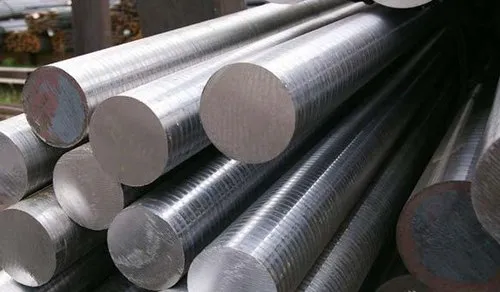
In the world of plastic mould making, tool steel selection plays a crucial role in performance, cost efficiency, and the final product’s quality. Among the most widely used materials are P20 Tool Steel and P20S Tool Steel. Both are pre-hardened steels designed for mould manufacturing, yet they differ in machinability, polishing characteristics, and suitability for specific applications.
In this article, we compare P20 vs P20S Tool Steel to help manufacturers, engineers, and procurement teams make the right choice.
What is P20 Tool Steel?
P20 Tool Steel is a versatile, pre-hardened mould steel known for its
- Hardness of 28–32 HRC (delivered in pre-hardened condition).
- Excellent toughness and durability.
- Good machinability for standard mould making.
- Suitable for plastic injection moulds, extrusion dies, and die casting tools.
Its balanced properties mamold-makingthe most preferred steels in the mould-making industry. Learn more on our dedicated page: P20 Tool Steel.
What is P20S Tool Steel?
P20S Tool Steel is a modified version of P20 with sulphur (S) added to the chemical composition. This addition enhances machinability and allows faster cutting speeds, making it highly popular for large-scale or complex moulds.
Key characteristics of P20S:
- Improved machinability compared to P20.
- Good toughness and strength.
- Slightly reduced polishability due to sulphur content.
- Widely used in automotive moulds and large injection mould tools.
Discover more: P20S Tool Steel.
Chemical Composition Comparison
Element | P20 (%) | P20S (%) |
| Carbon (C) | 0.28 – 0.40 | 0.28 – 0.40 |
| Chromium (Cr) | 1.40 – 2.00 | 1.40 – 2.00 |
Molybdenum (Mo) | 0.30 – 0.55 | 0.30 – 0.55 |
| Nickel (Ni) | 0.90 – 1.20 | 0.90 – 1.20 |
| Sulphur (S) | ≤ 0.005 | 0.05 – 0.10 |
Difference: The presence of sulphur in P20S enhances machinability but reduces polishability compared to P20.
Mechanical Properties
P20 Tool Steel:
- Hardness: 28–32 HRC
- Tensile Strength: ~1000 MPa
- Excellent toughness and polishability
P20S Tool Steel:
- Hardness: 28–32 HRC
- Similar tensile strength, slightly lower toughness than P20 o Superior machinability, moderate polishability
Key Differences Between P20 and P20S
Feature | P20 Tool Steel | P20S Tool Steel |
| Machinability | Good | Excellent |
| Polishability | Excellent | Moderate |
| Surface Finish | High Gloss | Standard |
| Weldability | Better | Slightly Lower |
Ideal Application | High-quality surface moulds | Large/complex moulds |
Applications in Mould Making
P20 Tool Steel Applications:
- High-gloss plastic injection moulds
- Extrusion dies
- Die casting tools
- Compression moulds
P20S Tool Steel Applications:
- Automotive parts moulds
- Large injection moulds
- Mould bases requiring faster machining
- General tooling where speed matters more than surface polish
Equivalent Grades
Both steels have close equivalents in international standards:
P20 Tool Steel Equivalents:
- AISI: P20
- DIN: 1.2311 / 1.2312
- JIS: SKD61
P20S Tool Steel Equivalents:
- DIN: 1.2312 (Modified)
- Similar to AISI P20 with sulphur modification
For other tool steels, explore D2 Tool Steel and H13 Tool Steel listed in our Tool Steel section.
P20 vs P20S: Which Should You Choose?
Choose P20 Tool Steel when:
- High surface finish and polishability are critical.
- The mould requires excellent wear resistance and toughness.
- Applications demand long tool life and high-quality finish.
Choose P20S Tool Steel when:
- You need faster machining speeds to save production time.
- The mould size is large, and machinability is more important than polish.
- Applications involve automotive and industrial tooling where surface finish is secondary.
Conclusion
Both P20 and P20S Tool Steels are excellent choices for mould making, but the right selection depends on application needs. P20 offers better polishability for high-gloss finishes, while P20S provides faster machinability for large and complex moulds.
 Let's Talk
A complete nickel alloy bar order states the UNS number, the ASTM or ASME product standard and grade...
Alloy 825 is a nickel-iron-chromium alloy with 2.5–3.5% molybdenum plus copper, suited to sulfuric a...
Carbon equivalent (Ceq) is calculated using the IIW formula — CEV = C + Mn/6 + (Cr+Mo+V)/5 + (Ni+Cu)...
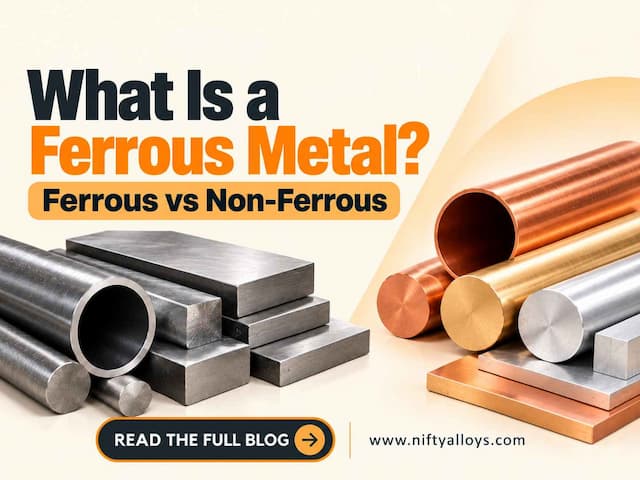
metal magnetism What Is a Ferrous Metal? Ferrous vs Non-Ferrous Explained Quick Answer ...




Elevate Your Projects with
with
 Our Superior Steels
