

1.4923 / X22CrMoV12-1 Steel Properties, Heat Treatment & Applications
Discover the mechanical properties, heat treatment procedures, and high-temperature performance of 1.4923 / X22CrMoV12-1 steel — the preferred martensitic grade for turbine blades, rotors, and power plant components. Supplied globally by Nifty Alloys.
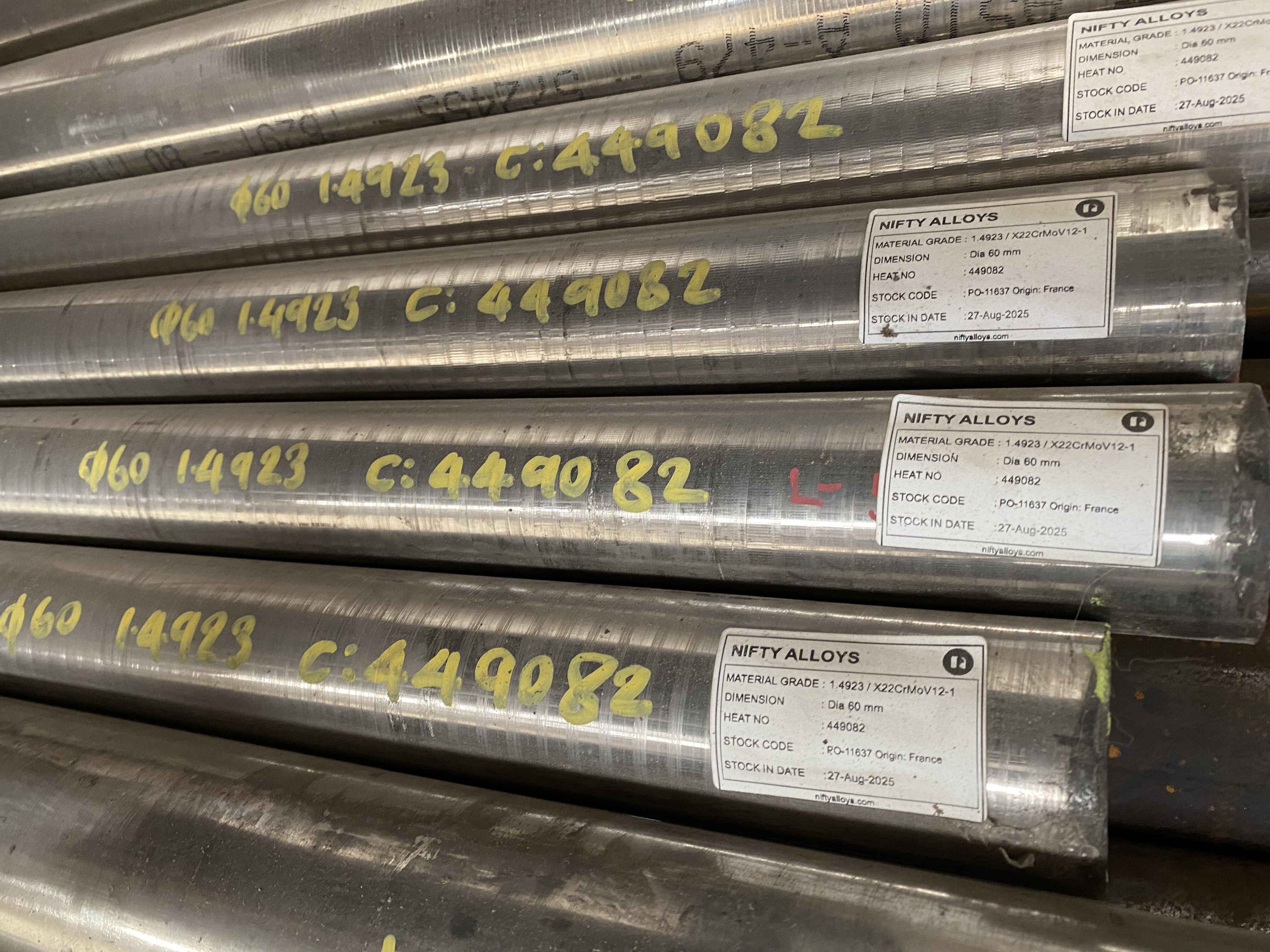
Why 1.4923 / X22CrMoV12-1 Is the Go-To Grade for High-Temperature Engineering
When engineers design steam turbines, gas turbines, and power plant components that must endure sustained high temperatures, cyclic stress, and oxidative atmospheres, the choice of steel is not merely a specification checkbox — it is a critical engineering decision. 1.4923 (X22CrMoV12-1) is one of the most widely specified martensitic chromium steels for these demanding environments, trusted by OEMs and engineering contractors across the energy, petrochemical, and heavy industrial sectors.
Also designated X22CrMoV12-1 under the European EN 10088 standard, this grade combines elevated chromium content with molybdenum and vanadium additions to deliver exceptional creep resistance, high-temperature tensile strength, and long-term dimensional stability — exactly what rotating machinery demands over decades of service.
In this guide, we cover everything you need to know about 1.4923 / X22CrMoV12-1: its composition, mechanical and physical properties, heat treatment requirements, typical applications, and key considerations when sourcing this material.
Chemical Composition of 1.4923 / X22CrMoV12-1
The alloy designation itself tells part of the story. The "12" in X22CrMoV12-1 refers to the nominal chromium content of approximately 12%, which places this steel firmly in the martensitic stainless steel family — distinct from austenitic grades and optimised for high-strength applications where moderate corrosion resistance and excellent creep strength are required simultaneously.
Element | Typical Content (%) |
| Carbon (C) | 0.18 – 0.24 |
| Chromium (Cr) | 11.0 – 12.5 |
| Molybdenum (Mo) | 0.80 – 1.20 |
| Vanadium (V) | 0.25 – 0.35 |
| Nickel (Ni) | ≤ 0.50 |
| Silicon (Si) | ≤ 0.50 |
| Manganese (Mn) | ≤ 0.70 |
| Phosphorus (P) | ≤ 0.025 |
| Sulfur (S) | ≤ 0.015 |
The combination of molybdenum and vanadium is particularly significant. Molybdenum raises the recrystallisation temperature and reduces susceptibility to temper brittleness, while vanadium forms fine carbide and carbonitride precipitates that pin grain boundaries and resist dislocation movement — the metallurgical mechanism responsible for creep resistance at elevated temperatures.
Mechanical Properties
1.4923 / X22CrMoV12-1 is typically supplied in the quenched and tempered (Q+T) condition. The following values represent the standard performance range for this grade:
Property | Value |
| 0.2% Proof Strength (Rp0.2) | 590 – 780 MPa |
| Tensile Strength (Rm) | 780 – 980 MPa |
| Elongation (A5) | ≥ 15% |
| Impact Energy (KV at 20°C) | ≥ 40 J |
| Hardness (HB) | 235 – 295 HB |
At elevated temperatures, the advantage of this grade becomes even more apparent. Its creep rupture strength at 500°C remains well above comparable low-alloy ferritic steels, and its resistance to stress relaxation makes it reliable for bolted flanged joints in high-pressure steam systems.
Physical Properties
Understanding the physical properties of 1.4923 / X22CrMoV12-1 is essential for thermal analysis, FEA modelling, and component design in rotating equipment:
Property | Value |
| Density | ~7.70 g/cm³ |
| Thermal Conductivity (at 20°C) | ~25 W/(m·K) |
| Specific Heat Capacity | ~460 J/(kg·K) |
| Coefficient of Thermal Expansion (20–500°C) | ~11.5 × 10⁻⁶ /K |
| Electrical Resistivity | ~0.70 µΩ·m |
| Modulus of Elasticity | ~215 GPa |
The relatively low thermal expansion coefficient compared to austenitic grades is a significant advantage in assemblies involving mixed materials — it reduces differential thermal stress at operating temperature, extending component fatigue life.
Heat Treatment of 1.4923 / X22CrMoV12-1
Correct heat treatment is non-negotiable for achieving the specified microstructure and mechanical properties in this grade. Deviations in austenitising temperature, quench rate, or tempering cycle can result in inadequate hardness, poor toughness, or premature in-service failure.
Austenitising (Hardening)
- Temperature: 1,020°C – 1,070°C
- Hold time: Sufficient to fully dissolve carbides and homogenise austenite (typically 1 hour per 25 mm of section thickness)
- Cooling: Oil quench or air/gas quench for large sections; water quench not recommended due to distortion and cracking risk
Tempering
- Temperature: 650°C – 750°C
- Hold time: Minimum 2 hours, repeated tempering cycles preferred for heavy sections
- Cooling after tempering: Air cool to room temperature
Double tempering is commonly specified for large forgings and turbine discs, where the second tempering cycle transforms any retained martensite from the first cycle and further stabilises the microstructure.
- Stress Relief (Post-Weld or Post-Machining)
- Temperature: 650°C – 700°C
- Hold time: 1–4 hours depending on section
This treatment is critical after any welding operation to avoid hydrogen-induced cracking and residual stress concentration
High-Temperature Performance and Creep Resistance
One of the defining characteristics of 1.4923 / X22CrMoV12-1 is its sustained performance at temperatures up to approximately 550°C – 580°C in continuous service. Beyond this range, the martensitic microstructure begins to over-temper, and strength declines. Within its operating window, however, the grade offers:
Excellent creep rupture strength — the 100,000-hour rupture strength at 500°C can reach 170–200 MPa
Good oxidation resistance up to ~600°C due to the 12% Cr content forming a stable chromite oxide layer
Low susceptibility to thermal fatigue under cyclic start-stop conditions
Dimensional stability over long service intervals — critical for blade tip clearances and sealing surfaces in turbomachinery
These properties make it a preferred specification in steam turbine rotors, where the balance between strength, toughness, and creep resistance at intermediate temperatures is difficult to achieve with either low-alloy ferritic or fully austenitic grades.
Common Applications
Steam Turbine Components
Turbine blades, guide vanes, discs, and shafts for medium-pressure and high-pressure steam turbine stages. The grade's fatigue strength and damping characteristics under cyclic bending are well-suited to blade design.
Gas Turbine Parts
Compressor blades and structural rings in industrial gas turbines operating at temperatures below the austenitic boundary of this grade.
Power Plant Fasteners and Bolting
High-temperature bolts, studs, and nuts for flanged pipe joints, valve bonnets, and pressure vessel closures in steam power generation.
Pump and Valve Internals
Impellers, shafts, and valve stems operating in high-pressure steam or process media at elevated temperatures.
Petrochemical and Refinery Equipment
Reactor internals, column trays, and high-pressure piping components where the combination of strength and moderate corrosion resistance is required.
Equivalent Grades and International Standards
1.4923 / X22CrMoV12-1 is referenced across several international standards, which is important when specifying or substituting the grade across global supply chains:
Standard | Designation |
| EN 10088-3 | X22CrMoV12-1 / 1.4923 |
| AISI / ASTM | No exact equivalent; closest is AISI 422 |
| BS | 2M31 (historical) |
| DIN | X22CrMoV12-1 |
| JIS | SUS431 (approximate, lower alloyed) |
When sourcing, always verify the material test certificate (MTC) and confirm the grade designation against the applicable European standard to avoid grade substitution errors — particularly relevant for critical rotating components subject to third-party inspection.
Why Source 1.4923 / X22CrMoV12-1 from Nifty Alloys?
Nifty Alloys is a trusted global stockist, supplier, exporter, and distributor of specialty steels and high-performance alloys, serving engineering contractors, OEMs, and procurement teams across the power generation, petrochemical, and heavy engineering sectors.
When you source 1.4923 / X22CrMoV12-1 through Nifty Alloys, you benefit from:
- Ready stock across multiple product forms — bar, forging, disc, and plate in a range of dimensions
- Full material certification — EN 10204 3.1 / 3.2 MTCs with heat traceability
- Global supply capability — export documentation, country-of-origin certification, and international logistics coordination
- Technical support — grade comparison, specification alignment, and sourcing guidance from experienced materials specialists
- Competitive lead times — for both standard and project-specific requirements
Conclusion
1.4923 / X22CrMoV12-1 is a precision-engineered martensitic chromium steel that delivers the combination of creep resistance, high-temperature strength, and mechanical toughness demanded by steam turbines, power plant rotating components, and high-pressure process equipment. Understanding its composition, proper heat treatment, and operating limits is essential for engineers specifying this grade — and partnering with an experienced global stockist ensures that supply quality and documentation meet the exacting standards of regulated industries.
 Let's Talk
The six most common material specification mistakes in oil and gas and industrial procurement are: s...
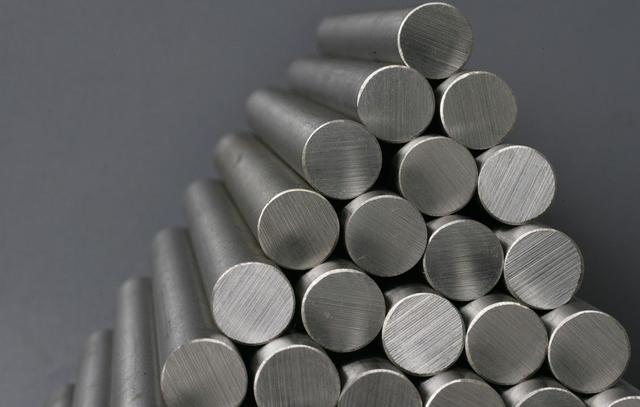
Looking for a stainless steel round bar supplier in UAE? Compare grades 304, 316, and 316L, key spec...
EN31 bearing steel should be used for applications requiring high hardness, wear resistance, and fat...




Elevate Your Projects with
with
 Our Superior Steels
