

Stainless Steel Grades Explained: How to Choose the Right Grade for Your Project (Including 304, 316, 321, 410, 420, and 17-4PH)
This article will help you understand the fundamentals of stainless steel grades and make an informed decision for your application. For assistance with material selection, equivalent grades, or sourcing hard-to-find specifications, you can rely on the experts at Nifty Alloys.
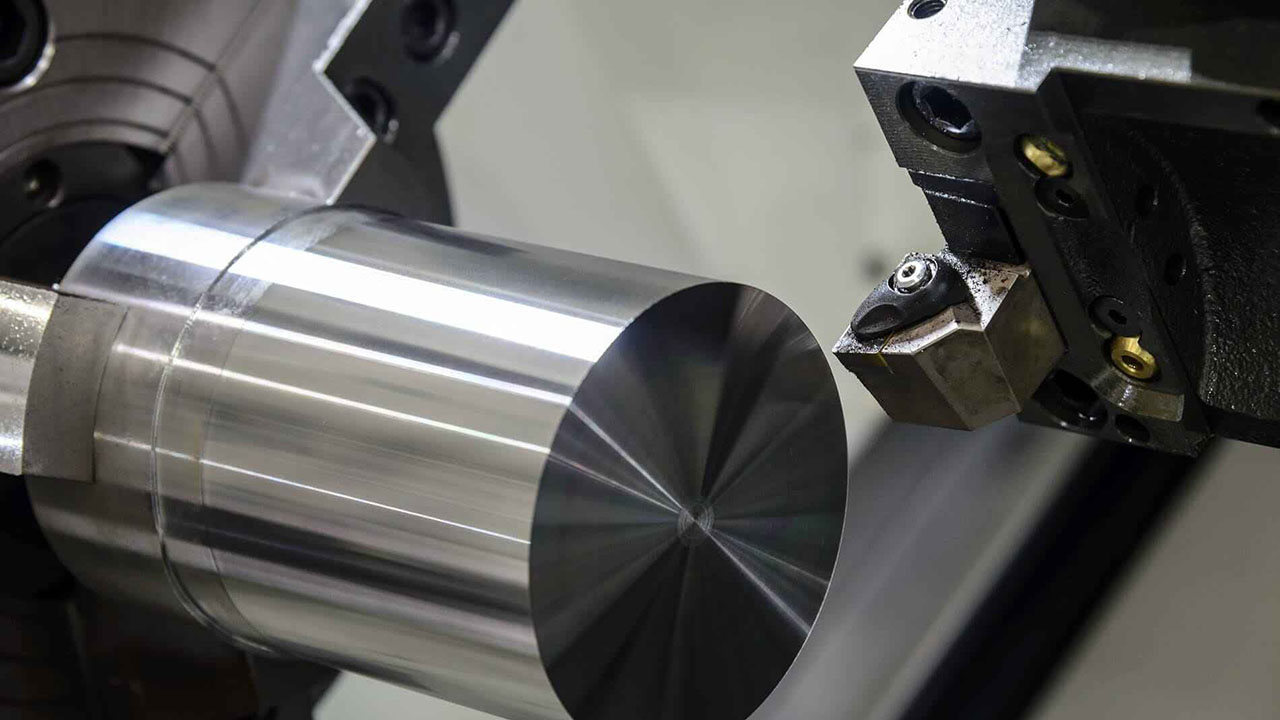
Selecting the correct material is one of the most critical decisions in any engineering project. When it comes to metals that offer a combination of strength, durability, and corrosion resistance, stainless steel is a leading choice. However, "stainless steel" is not a single material but a family of alloys, each with a unique chemical composition and distinct performance characteristics. There are hundreds of stainless steel grades and choosing the wrong one can lead to premature failure, unexpected corrosion, or unnecessary project costs.
Understanding the differences between common grades is essential for engineers, procurement managers, and designers. This practical guide explains the most frequently specified stainless steel grades, including 304, 316, 321, 410, 420, and the high-strength 17-4PH. As a specialist supplier of high-performance alloys, Nifty Alloys LLC provides the materials and expertise required to ensure your selection meets precise project demands. Our commitment to quality, backed by our ISO 9001:2015 certification, ensures you receive materials that perform reliably.
How Stainless Steel Grades Work
Not every stainless steel grade behaves the same way in service — 304 corrodes within months in a chloride-rich environment where 316 lasts years, and swapping grades based on price alone is one of the most common procurement mistakes in the region. This section breaks down the three grade families you'll actually be choosing between, and when each one is the right call.
The main families of stainless steel are:
- Austenitic: The most common family, known for excellent corrosion resistance and formability.
- Martensitic: Valued for high hardness and strength, making them ideal for cutting tools and high-wear parts.
- Precipitation Hardening (PH): A specialized family that combines high strength with good corrosion resistance through heat treatment.
Each family possesses a unique combination of mechanical properties. For example, austenitic grades are generally non-magnetic and cannot be hardened by heat treatment, while martensitic grades are magnetic and can be. As a supplier founded in 2020, Nifty Alloys has established expertise in sourcing materials from all these families, including complex equivalent grades for critical industries like aerospace and oil and gas.
Family | Example Grades | Main Features | Typical Uses |
| Austenitic | 304, 316, 321 | Excellent corrosion resistance, good formability, non-magnetic. | Food processing equipment, chemical tanks, architectural structures. |
| Martensitic | 410, 420 | High strength and hardness, good wear resistance, magnetic. | Cutlery, surgical instruments, valves, turbine blades. |
| Precipitation Hardening | 17-4PH | Very high strength, good corrosion resistance, good toughness. | Aerospace components, high-performance shafts, pump parts. |
Austenitic Stainless Steels: 304, 316, and 321
Austenitic stainless steels are the most widely used group due to their superb corrosion resistance and fabrication characteristics. Grades in the 300 series are defined by their high chromium and nickel content, which provides a stable austenitic microstructure at all temperatures.
304 Stainless Steel
Grade 304 is often called the "18/8" stainless steel, referring to its typical composition of 18% chromium and 8% nickel. It is the most versatile and common stainless steel on the market.
- Uses: Its balance of properties makes it ideal for general-purpose applications, including kitchen equipment, food processing machinery, tanks, piping, and architectural paneling.
- Strengths: Excellent formability, weldability, and general corrosion resistance in atmospheric and mild chemical environments.
- Limitations: Grade 304 is susceptible to pitting and crevice corrosion in environments containing chlorides, such as coastal areas or de-icing salt solutions.
316 Stainless Steel
Grade 316 is the second most common austenitic grade. Its key difference from 304 is the addition of molybdenum (typically 2-3%). This enhancement significantly improves its resistance to corrosion, especially against chlorides and other industrial chemicals.
- Uses: Preferred for marine applications, chemical and pharmaceutical equipment, and any environment where exposure to salts or corrosive acids is a concern.
- 304 vs 316: The primary difference is corrosion resistance. While 316 is superior in harsh environments, it comes at a higher cost. The choice between 304 vs 316 depends on balancing the required performance against the project budget.
321 Stainless Steel
Grade 321 is a variation of Grade 304 that includes titanium as a stabilizing element. This stabilization prevents carbide precipitation at elevated temperatures, making it a superior choice for high-temperature service.
- Uses: Ideal for applications involving intermittent heating between 425°C and 900°C (800°F and 1650°F), such as aircraft exhaust manifolds, expansion joints, and furnace parts. It is a key heat-resistant stainless steel.
- Strengths: Excellent resistance to intergranular corrosion after exposure to high temperatures.
Nifty Alloys supplies a complete range of austenitic stainless steel products, ensuring you receive the correct grade for your specific environmental and thermal conditions.
Grade | Corrosion Resistance | Temperature Capability | Typical Use | Relative Cost |
| 304 | Good | Standard | General Purpose, Food & Beverage | Low |
| 316 | Excellent | Standard | Marine, Chemical Processing | Medium |
| 321 | Good (Excellent at temp) | High | High-Temperature Exhausts, Furnace Parts | High |
Martensitic Stainless Steels: 410 and 420
The martensitic family of stainless steels is engineered for high hardness and strength. These grades contain higher levels of carbon and lower chromium content compared to austenitic grades. They can be hardened by heat treatment, much like carbon steels, but offer better corrosion resistance. However, their resistance to corrosion is generally lower than that of the 300 series.
410 Stainless Steel
Grade 410 is the basic, general-purpose martensitic stainless steel. It offers good corrosion resistance along with high strength and hardness. In the hardened condition, it provides excellent wear resistance.
- Applications: It is frequently used for highly stressed parts needing a combination of strength and corrosion resistance, such as steam and gas turbine blades, pump and valve components, fasteners, and cutlery.
- Properties: It is magnetic in all conditions and provides fair resistance to atmospheric corrosion, mild chemicals, and fresh water.
420 Stainless Steel
Grade 420 is essentially a higher-carbon version of Grade 410. The increased carbon content allows it to achieve greater hardness and strength after heat treatment. This makes it an excellent material for applications requiring sharp edges and high wear resistance.
- Applications: Commonly known as "surgical steel," it is used for dental and surgical instruments, high-quality knife blades, needle valves, and shear blades.
- Trade-Offs: While Grade 420 can be hardened to one of the highest levels of any stainless steel, this comes at the cost of reduced corrosion resistance compared to 410 and significantly less than austenitic grades like 304.
The choice between an austenitic grade like 304 and a martensitic grade like 410 or 420 depends on the primary requirement: if corrosion resistance is paramount, choose austenitic. If hardness, strength, and wear resistance are the priorities, martensitic stainless steel is the correct choice. Nifty Alloys can supply various martensitic and tool steels to meet your mechanical performance needs.
Precipitation Hardening Stainless Steel: 17-4PH
Precipitation hardening (PH) stainless steels offer a unique and highly desirable combination of properties. They provide the high strength typical of martensitic grades while retaining corrosion resistance comparable to austenitic grades. This is achieved through a solution and aging heat treatment process that "precipitates" strengthening particles within the alloy's matrix.
The most common PH grade is 17-4PH. The name refers to its composition of approximately 17% chromium and 4% nickel.
- Properties: 17-4PH stainless steel is prized for its exceptional strength, high hardness, good corrosion resistance, and excellent toughness. It maintains its mechanical properties at temperatures up to 315°C (600°F).
- Typical Uses: Its robust profile makes it a go-to material for demanding applications in the aerospace, chemical processing, and oil and gas industries. Common components include valve parts, pump shafts, aircraft structural components, and high-strength fasteners.
- Comparison with 304/316: While its general corrosion resistance is similar to that of Grade 304, 17-4PH offers significantly higher tensile and yield strength—often more than double. It is selected when mechanical performance, not just corrosion resistance, is the primary design driver.
As a trusted 17-4PH supplier, Nifty Alloys ensures that this critical material is provided with full traceability and meets the stringent quality standards required for high-performance applications. We also stock other special alloys, including Inconel 718 and C18200 chromium copper, for the most demanding environments.
Duplex and Super Duplex Stainless Steel
Duplex grades (2205/S32205) combine austenitic and ferritic microstructures, giving roughly double the yield strength of standard 304/316 along with superior resistance to chloride stress-corrosion cracking. Super duplex grades (S32750, S32760) push pitting resistance further (PREN ≥40) for the most aggressive service — subsea equipment, desalination, and sour service under NACE MR0175 / ISO 15156.
- Uses: Pressure vessels, desalination plants, offshore platforms, subsea pipelines
- 304/316 vs duplex: Choose duplex when chloride stress-corrosion cracking or higher mechanical strength rules out standard austenitic grades — common in Gulf seawater and sour service environments.
How to Choose the Right Stainless Steel Grade for Your Project
Selecting the optimal stainless steel grade is a process of balancing performance requirements, environmental factors, and cost. Following a structured approach ensures you make the right choice.
1. Define the Operating Environment
The single most important factor is the environment where the component will operate.
- Mild Environments: For indoor or rural atmospheric exposure with no corrosive elements, Grade 304 is often sufficient and cost-effective.
- Corrosive Environments: For marine settings, coastal areas, or exposure to chlorides and chemicals, Grade 316 or higher is necessary to prevent pitting and crevice corrosion.
- High-Wear Environments: For parts subject to abrasion or requiring a hard edge, a martensitic grade like 410 or 420 is more suitable.
2. Consider Temperature and Mechanical Loads
The operational stresses and temperatures will narrow your choices.
- High Temperatures: If the component will operate consistently or intermittently at high temperatures (above 425°C), a stabilized grade like 321 is required to prevent sensitization and loss of corrosion resistance.
- High Strength Requirements: When high tensile and yield strength are critical, standard austenitic grades may not suffice. 17-4PH stainless steel or other precipitation hardening grades provide an excellent solution.
3. Evaluate Fabrication and Welding Needs
Consider how the material will be formed, machined, and joined.
- Austenitic grades like 304 and 316 are known for excellent formability and weldability.
- Martensitic grades can be more challenging to weld and may require pre- and post-weld heat treatments.
- Consulting a specialist supplier like Nifty Alloys can help you anticipate fabrication challenges associated with a particular grade.
4. Balance Performance vs. Cost
Higher performance almost always comes with a higher price tag.
- Avoid over-engineering. Using 316 where 304 would suffice adds unnecessary cost.
- Conversely, trying to save money by using a lower-grade material in a demanding application will lead to costly failures.
- The use of a high-performance alloy like 17-4PH should be justified by a clear need for its unique strength and corrosion resistance combination.
5. Check Standards and Equivalent Grades
Projects often reference specific international standards (ASTM, EN, DIN, etc.). A designation in one standard may have a direct equivalent in another.
- An expert supplier is invaluable here. Nifty Alloys specializes in identifying and sourcing equivalent grades, ensuring your material meets all contractual and technical specifications, regardless of the designation used.
FAQ: Stainless Steel Grades and Selection
What are the most common stainless steel grades?
- The most common grades are from the austenitic family. Grade 304 is the most widely used stainless steel due to its excellent all-around performance and cost-effectiveness. Grade 316 is the second most common, chosen for its superior corrosion resistance in more aggressive environments.
What is the difference between 304 and 316 stainless steel?
- The key difference is the addition of molybdenum to Grade 316. This gives it significantly better resistance to corrosion from chlorides (like salt) and many industrial chemicals. 304 is suitable for general use, while 316 is necessary for marine or chemical applications.
When should I choose 321 stainless steel?
- Choose Grade 321 for applications involving high temperatures, typically between 425°C and 900°C. It is stabilized with titanium to resist intergranular corrosion after welding or during high-temperature service, making it ideal for exhaust systems and industrial furnace components.
What are 410 and 420 stainless steels used for?
- Grades 410 and 420 are martensitic stainless steels valued for hardness and wear resistance. 410 is used for parts like turbine blades and fasteners. 420, which is harder, is used for cutting tools, knife blades, and surgical instruments where a sharp, durable edge is required.
What is 17-4PH stainless steel and where is it used?
- 17-4PH is a precipitation hardening stainless steel known for its exceptional combination of high strength, good corrosion resistance, and toughness. It is used in high-performance applications in the aerospace, oil and gas, and manufacturing industries for components like shafts, valves, and structural parts.
How do I choose the right stainless steel grade for corrosion resistance?
- For general atmospheric corrosion, Grade 304 is sufficient. For exposure to saltwater, de-icing salts, or corrosive chemicals, Grade 316 is the minimum standard. For highly specialized or aggressive chemical environments, other advanced alloys may be needed. Contact Nifty Alloys for a project-specific recommendation.
Which stainless steel grade is best for high temperatures?
- For sustained or intermittent service at elevated temperatures, a stabilized austenitic grade like 321 is an excellent choice. It maintains its corrosion resistance and structural integrity where standard grades like 304 would fail due to carbide precipitation.
Which stainless steel grade is best for high strength?
- For applications requiring the highest mechanical strength, precipitation hardening grades like 17-4PH are superior. They can achieve much higher tensile and yield strengths than austenitic grades while still providing good corrosion resistance. Martensitic grades like 420 also offer high hardness.
Can I switch between equivalent stainless steel grades?
- Yes, but with expert guidance. Different international standards (ASTM, EN, etc.) often have grades with nearly identical chemical and mechanical properties. Nifty Alloys specializes in cross-referencing and supplying certified equivalent grades to meet your project specifications without compromising quality or compliance.
How can a specialist supplier help me select the right grade?
- A specialist supplier like Nifty Alloys provides critical expertise. We help you navigate the complexities of different grades, evaluate environmental factors, and balance cost against performance. Our knowledge of equivalent grades and hard-to-source materials ensures you get the right product for your application, on time and with full certification.
Your Partner for High-Performance Alloys
Choosing the right stainless steel grade is a foundational step for ensuring the long-term success, safety, and cost-efficiency of your project. As we have seen, grades like 304, 316, 321, 410, 420, and 17-4PH each offer a distinct set of properties tailored to specific challenges, from general atmospheric exposure to high-temperature, high-stress, and corrosive environments.
Making the correct selection requires a clear understanding of your application's demands. At Nifty Alloys LLC, we are more than just a supplier; we are your partner in material selection. Since our founding in 2020, we have built a reputation for reliability, quality, and technical expertise across demanding sectors.
Share your project requirements with our team for expert guidance on grade selection and sourcing certified equivalents. Explore our range of special alloys and use our online steel weight calculator for quick estimates.
For a reliable supply of certified, high-performance stainless steel, contact Nifty Alloys today.
 Let's Talk
A complete nickel alloy bar order states the UNS number, the ASTM or ASME product standard and grade...
Alloy 825 is a nickel-iron-chromium alloy with 2.5–3.5% molybdenum plus copper, suited to sulfuric a...
Carbon equivalent (Ceq) is calculated using the IIW formula — CEV = C + Mn/6 + (Cr+Mo+V)/5 + (Ni+Cu)...
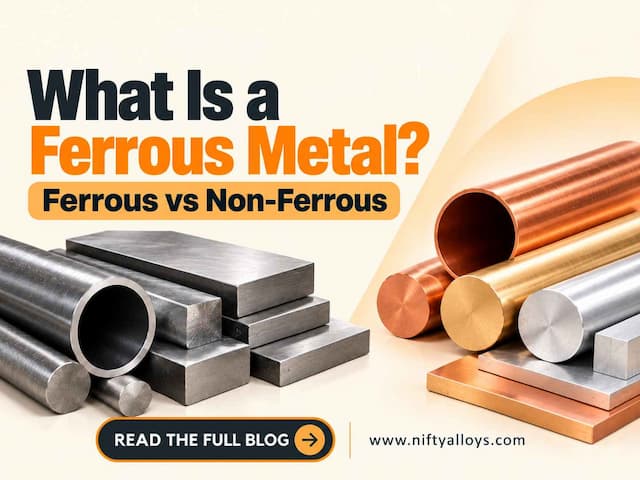
metal magnetism What Is a Ferrous Metal? Ferrous vs Non-Ferrous Explained Quick Answer ...




Elevate Your Projects with
with
 Our Superior Steels
