

The Ultimate Guide to Tool Steel: Grades, Properties & Applications
Tool steel is a family of high-carbon, high-alloy steels — including cold work (D2, O1, A2), hot work (H13), and high-speed (M2) grades — engineered for cutting, forming, and die applications. This guide covers grades, properties, heat treatment, and selection criteria for engineers and procurement teams in the UAE and GCC.
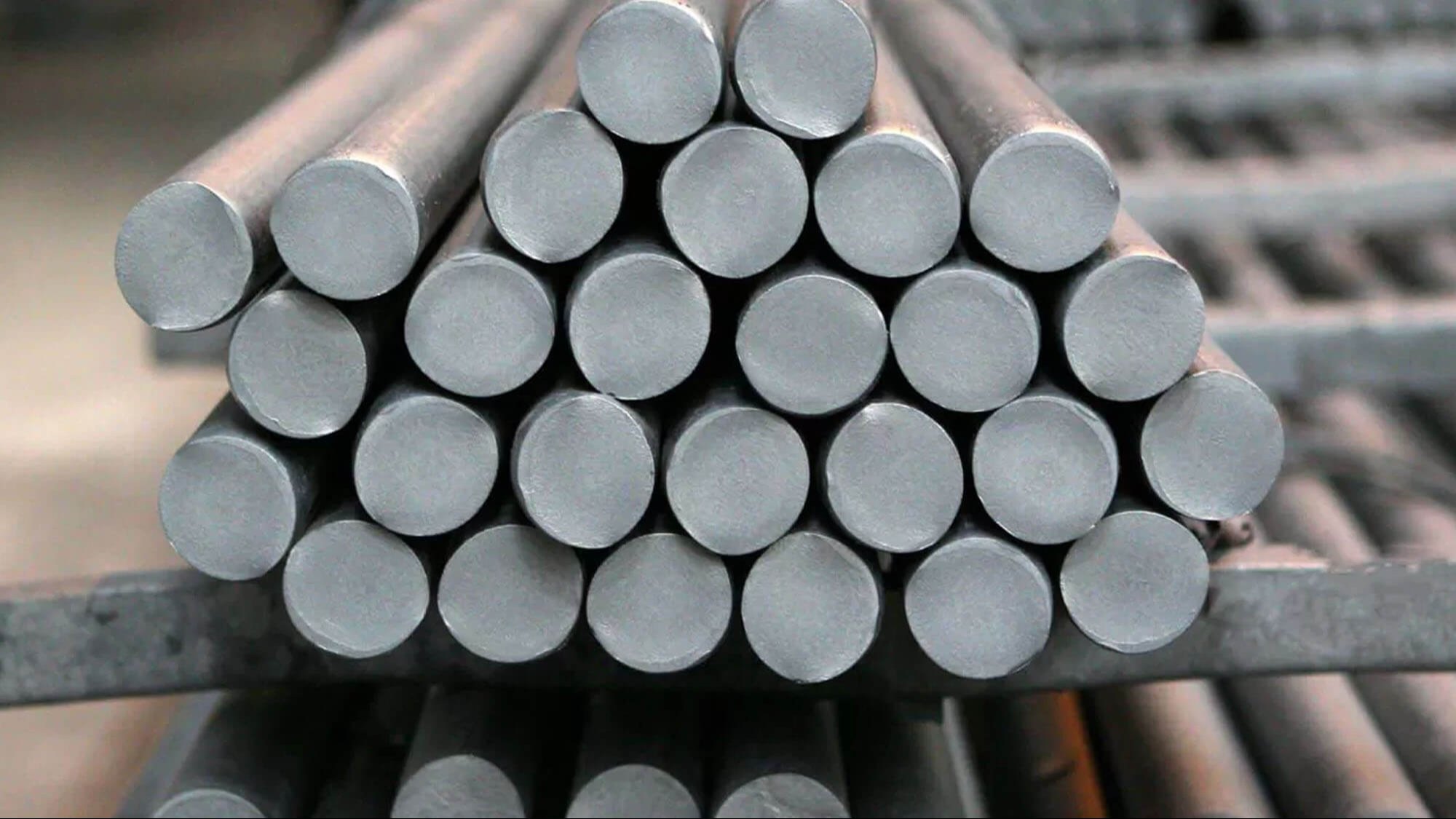
What is tool steel?
Tool steel refers to a specialized family of carbon and alloy steels known for their distinctive hardness, resistance to abrasion, and ability to hold a sharp cutting edge even at elevated temperatures. These materials generally contain carbide formers like chromium, vanadium, molybdenum, and tungsten, making them the backbone of shaping, cutting, and forming processes in modern manufacturing.
In the demanding industrial landscape of the Middle East, selecting the correct material is not just a matter of preference—it is a matter of operational efficiency. As a trusted tool steel supplier in the UAE, Nifty Alloys LLC provides these high-performance materials to precision engineering firms and manufacturers across Dubai, Abu Dhabi, and the wider region. Whether you are stamping automotive parts or extruding aluminum profiles, the integrity of your tooling directly impacts your production quality and downtime.
Understanding Tool Steel Categories
To navigate the complex market of specialty alloys, it is essential to understand the three primary categories of tool steel. Each category is engineered to perform under specific environmental conditions, particularly regarding temperature and stress.
1. Cold Work Tool Steel
Cold work tool steel is designed for applications where the surface temperature of the tool does not exceed 200°C (400°F) during operation. These grades are high in carbon and relatively low in alloying elements compared to high-speed steels, but they offer exceptional wear resistance and the ability to hold a sharp cutting edge.
They are the standard choice for blanking dies, stamping tools, and shear blades. Because they do not require resistance to high thermal shock, the focus here is on surface hardness and structural integrity under heavy loads.
2. Hot Work Tool Steel
When manufacturing processes involve shaping hot metals—such as in die casting, forging, or extrusion—hot work tool steel is the requisite material. These grades must retain their hardness and strength even when prolonged exposure to elevated temperatures occurs.
Key alloying elements like chromium, tungsten, and molybdenum provide these steels with "red hardness," meaning they resist softening when hot. Furthermore, they are engineered to resist thermal fatigue, often referred to as "heat checking," which occurs when tools undergo rapid heating and cooling cycles.
3. High-Speed Steel (HSS)
High-speed steel is a subset of tool steel used primarily for cutting tools. As the name suggests, these steels can operate at high cutting speeds without losing their temper (hardness). They contain high levels of tungsten and molybdenum, allowing them to cut through other metals faster than standard high-carbon steels.
While tool steels are distinct in their composition, it is often helpful to compare their extreme hardness against other common industrial materials. For a broader perspective on material differences, you can review our guide on What Is Stainless Steel? Properties, Types & Uses Explained.
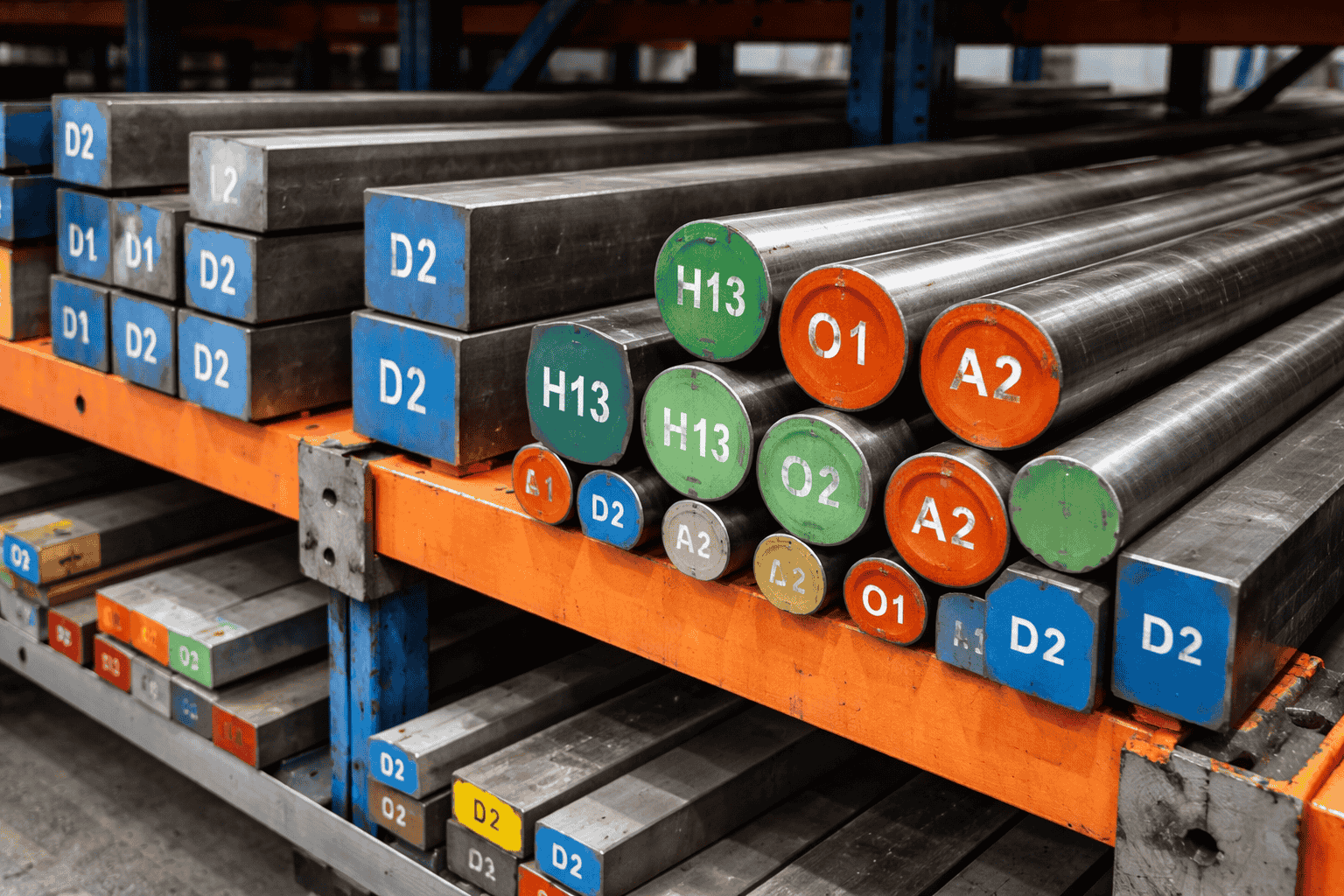
Comparing Key Tool Steel Grades
Choosing between tool steel grades involves real trade-offs in wear resistance, toughness, and heat resistance. Cold work grades like D2 and A2 dominate stamping and forming applications, H13 is the standard for hot-work die casting and extrusion, and high-speed grades like M2 hold their edge under continuous cutting.
See our full D2 vs A2 vs O1 vs H13 vs P20 comparison guide for detailed mechanical specs, hardness ranges, and grade-selection guidance.
Technical Properties & Material Selection
When sourcing materials for critical projects, understanding the mechanical properties is non-negotiable. At Nifty Alloys LLC, we encourage buyers to look beyond the grade name and evaluate the specific properties required for the tool's failure mode.
Hardness
Hardness is the measure of a steel's resistance to deformation. In tool steel hardening, achieving the correct Rockwell C (HRC) value is critical. If a tool is too soft, it will deform or wear out prematurely. If it is too hard, it becomes brittle and may crack under impact.
Toughness
Toughness refers to the material's ability to absorb energy and resist fracturing. This is particularly vital for tools that undergo shock loading, such as hammer dies or punches. Grades like S7 are specifically formulated to prioritize toughness over peak hardness to prevent catastrophic failure during operation.
Wear Resistance
There are two main types of wear: abrasive and adhesive. Cold work tool steel grades like D2 utilize high volumes of chromium carbides to resist abrasive wear (sliding against other materials). This ensures the tool maintains its dimensions over millions of cycles, which is crucial for high-volume production runs in Dubai’s manufacturing sectors.
Material Density and Weight Calculation
Accurate estimation of material weight is essential for logistics and cost calculation. Tool steels generally have a density similar to other carbon steels, but slight variations exist due to alloying elements like tungsten. To assist engineers with precise material calculations, we recommend consulting our resource on Density of Steel and Common Metals: Charts and Formulas.
Furthermore, for immediate project planning, you can utilize our online Free Steel Weight Calculator in KG to estimate your specific project needs based on bar or plate dimensions.
Heat Treatment and Hardening Processes
The raw material supplied by Nifty Alloys LLC is typically in an annealed (soft) state to allow for machining. However, the steel is virtually useless for tooling applications until it undergoes tool steel hardening. This heat treatment process transforms the internal microstructure of the steel to achieve the desired mechanical properties.
The Hardening Cycle
- Preheating: The steel is heated slowly to an intermediate temperature to prevent thermal shock.
- Austenitizing: The temperature is raised to the critical range where the crystal structure changes to austenite.
- Quenching: The steel is rapidly cooled (using oil, water, or air, depending on the grade) to trap the carbon in a hard structure called martensite.
- Tempering: Because the as-quenched steel is extremely brittle, it must be reheated to a lower temperature. Tempering sacrifices a small amount of hardness to significantly increase toughness and relieve internal stresses.
Optimizing this process requires precise temperature control. Improper heat treatment is the leading cause of tool failure. For a deeper look at thermal processing and how different grades respond to heat, refer to our specialized guide on 4140 Steel Heat Treatment: Material Properties, Hardness & Strength.
Custom Processing Services for Tool Steel
As a premier tool steel supplier in the UAE, we understand that receiving raw billets is rarely sufficient for modern "Just-in-Time" manufacturing environments. Our facility is equipped to process materials to near-net shape, reducing your machining time and material waste.
Lumsden Ground Steel Plate
For applications requiring perfectly flat surfaces, such as bolster plates or jig bases, we offer Lumsden grinding. This process removes surface imperfections and decarburization layers, ensuring you receive a plate that is flat, parallel, and ready for final machining.
Bandsaw Cutting
Whether you need single pieces or high-volume production blanks, our industrial bandsaws can cut tool steel bars and blocks to your exact length tolerances. This capability handles everything from small diameters up to large cross-section blocks used for heavy forging dies.
Oxyfuel and Plasma Cutting
For plate materials, we provide profiling services that can cut complex shapes directly from the master plate. This service is invaluable for reducing machining time on irregular components.
_1766648515.png)
Future Outlook: 2026 Price Data & Market Trends
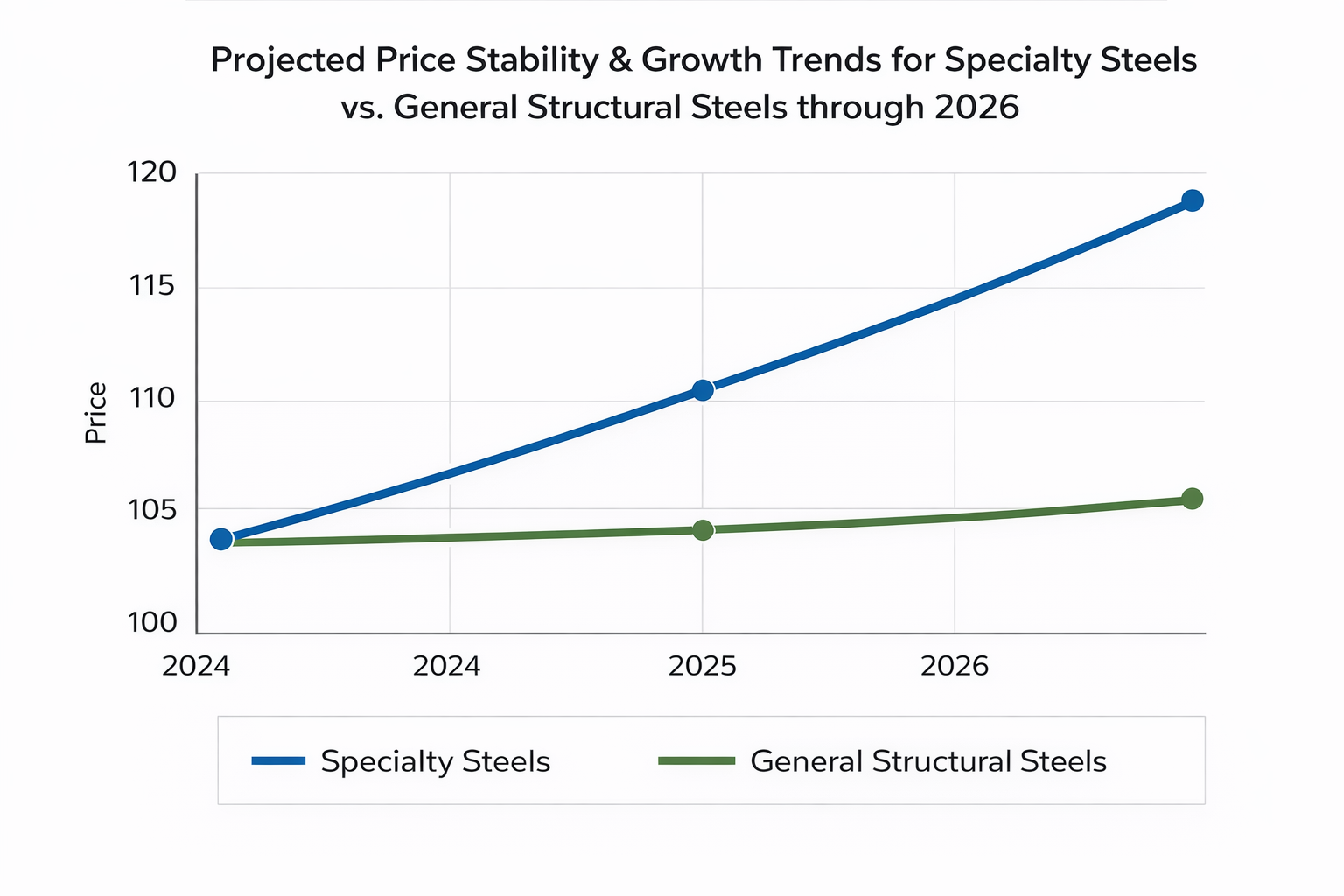
The market for specialty alloys, including high-speed steel and tool steels, is subject to global volatility. Factors such as the cost of alloying elements (Molybdenum, Vanadium, and Tungsten), energy prices, and supply chain constraints heavily influence procurement strategies.
Looking ahead to 2026, buyers in the UAE should anticipate a continued focus on supply chain resilience. While base steel prices may stabilize, the premiums for high-alloy grades are expected to fluctuate based on the availability of raw minerals. Smart procurement involves forecasting these trends to lock in prices for long-term projects.
We provide data-driven insights to help our clients navigate these changes. For a detailed analysis of what to expect in the coming years, please reference our Steel Price Forecast 2026: What Buyers Should Expect.
Quality Assurance & Certification
In critical industrial applications, there is no room for ambiguity regarding material composition. A grade like H13 must meet specific chemical limits to perform safely in a high-pressure die casting environment.
Traceability and Mill Test Certificates (MTC)
At Nifty Alloys LLC, every bar and plate we supply is fully traceable to the producing mill. We provide Mill Test Certificates (MTC) with every shipment. These documents verify the chemical analysis, heat treatment condition, and mechanical properties of the steel.
It is vital that your receiving inspection teams know how to validate these documents to ensure compliance with ASTM, DIN, or BS standards. To support your quality control processes, we have published a guide on How to Read Mill Test Certificates (MTC) — Step-by-Step. This resource ensures you can confidently verify that the grade you ordered is exactly what you received.
Conclusion
Tool steel is the foundation of modern manufacturing. Whether you are cutting, forming, or casting, the longevity of your tools—and the profitability of your projects—depends on selecting the right Tool Steel Grades. From the wear resistance of D2 steel properties to the thermal resilience of H13 tool steel, understanding these materials is key to operational success.
As the industrial sector in the UAE continues to expand, Nifty Alloys LLC remains committed to delivering certified, high-quality materials backed by technical expertise and reliable supply chains. Do not compromise on your tooling; ensure you have the right material, certified and delivered on time.
Frequently Asked Questions
What is tool steel used for?
Tool steel is used for cutting, forming, stamping, and die-casting tools due to its high hardness, wear resistance, and ability to hold a sharp edge under stress and elevated temperatures.
What is the difference between D2 and H13 tool steel?
D2 is a cold work steel with high wear resistance for room-temperature applications. H13 is a hot work steel designed for thermal fatigue resistance in die casting and forging dies.
What hardness does tool steel reach after heat treatment?
Depending on the grade, tool steel achieves between 54 HRC (O1) and 66 HRC (M2 high-speed steel) after hardening and tempering.
Which tool steel is best for aluminum die casting?
H13 is the industry standard for aluminum die casting dies due to its excellent thermal fatigue resistance and toughness at elevated temperatures.
Does Nifty Alloys supply tool steel in the UAE?
Yes. Nifty Alloys supplies D2, H13, O1, A2, M2, and S7 tool steel in round bars, flat bars, and plates to customers across Dubai, Abu Dhabi, and the GCC with full Mill Test Certificates (MTCs).
Ready to secure high-performance materials for your next project?
Talk To An Expert today for a custom quote or to discuss specific grade requirements, including specialty items like Silver Steel Bar or Manganese Steel. Our engineering team is ready to assist you with technical data and competitive pricing.
 Let's Talk
A complete nickel alloy bar order states the UNS number, the ASTM or ASME product standard and grade...
Alloy 825 is a nickel-iron-chromium alloy with 2.5–3.5% molybdenum plus copper, suited to sulfuric a...
Carbon equivalent (Ceq) is calculated using the IIW formula — CEV = C + Mn/6 + (Cr+Mo+V)/5 + (Ni+Cu)...
metal magnetism What Is a Ferrous Metal? Ferrous vs Non-Ferrous Explained Quick Answer ...




Elevate Your Projects with
with
 Our Superior Steels
