

Carbon Steel vs Stainless Steel: Differences, Properties & When to Use Each
Carbon steel and stainless steel are both iron-based alloys but differ fundamentally in chromium content. Carbon steel contains less than 10.5% chromium and has no passive protective layer — it corrodes without coatings or cathodic protection. Stainless steel contains a minimum of 10.5% chromium, forming a self-repairing oxide film that provides inherent corrosion resistance. Carbon steel is the cost-effective choice for non-corrosive service; stainless steel is specified where corrosion resistance, hygiene, or low-maintenance service life justifies the higher cost.
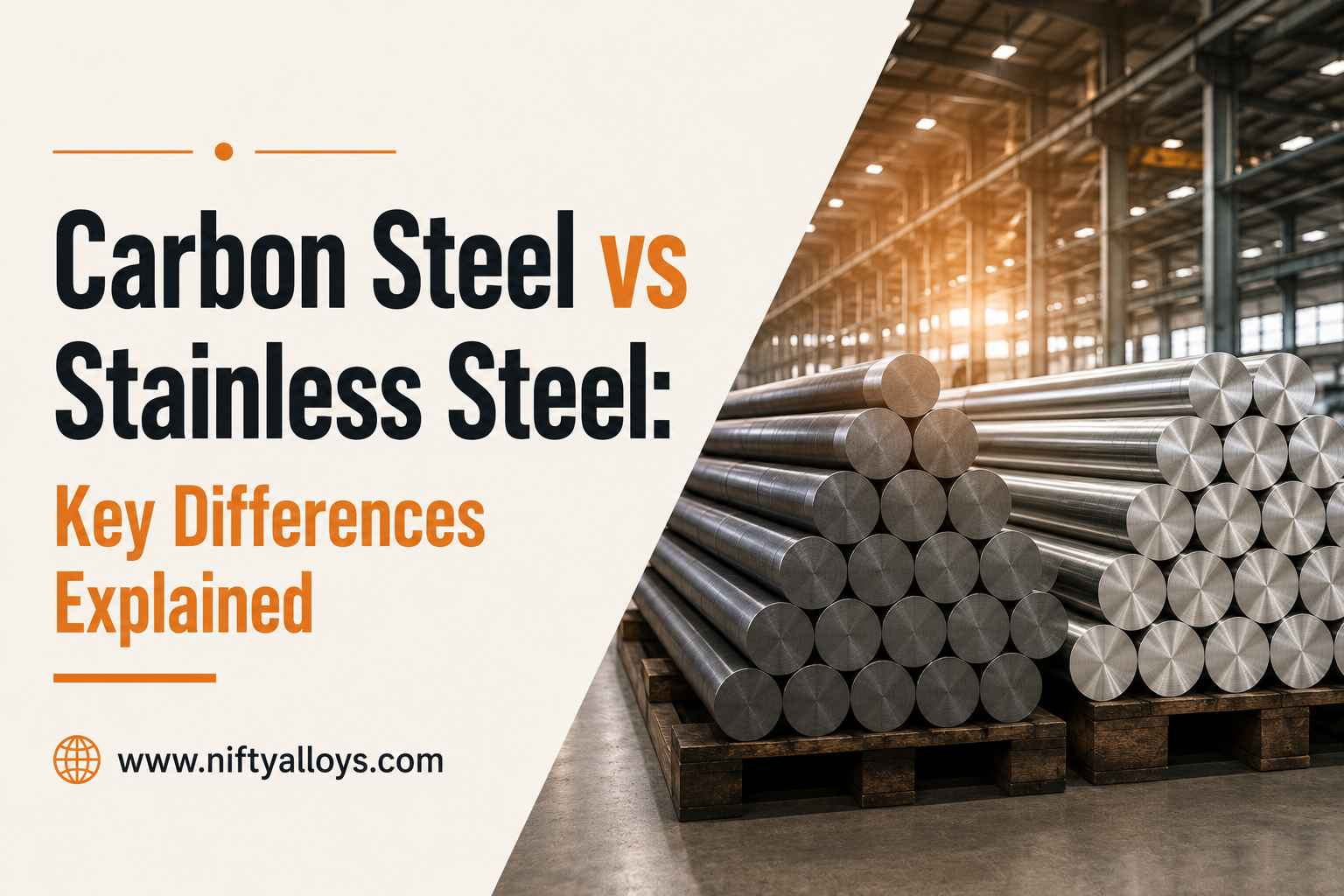
Carbon steel versus stainless steel is one of the most fundamental material selection decisions in industrial procurement. Both are widely available, both cover a broad range of product forms and ASTM standards, and both are used across oil and gas, marine, and engineering applications globally. The difference comes down to one element: chromium. Getting the selection right saves cost in benign environments and prevents failure in corrosive ones. This guide covers the key differences, a side-by-side comparison, and a practical decision framework for procurement and engineering teams.
What Is Carbon Steel?
Carbon steel is an iron-carbon alloy containing 0.05–2.0% carbon with minimal chromium (below 10.5%). Without a passive protective layer, carbon steel corrodes in the presence of moisture, chlorides, and acids — requiring coatings, galvanising, or cathodic protection in wet service. It is classified by carbon content: low carbon (mild steel, 0.05–0.30% C — ASTM A36, A106, API 5L), medium carbon (0.30–0.60% C), and high carbon (0.60–1.00% C). Low carbon grades dominate oil and gas and structural applications.
What Is Stainless Steel?
Stainless steel contains a minimum of 10.5% chromium, which reacts with oxygen to form a thin, stable chromium oxide (Cr₂O₃) passive layer. This layer is self-repairing — if scratched, it re-forms spontaneously — providing continuous corrosion protection without coatings. The five stainless steel families are austenitic (304, 316 — most common), ferritic (430), martensitic (410, 420), duplex (S32205, S32750 — high strength + corrosion), and precipitation hardening (17-4 PH — high strength). Grade selection is critical: not all stainless steel performs equally in all environments.
Carbon Steel vs Stainless Steel — Key Differences
Feature | Carbon Steel | Stainless Steel |
| Chromium content | < 10.5% — no passive film | ≥ 10.5% — forms self-repairing Cr₂O₃ passive layer |
| Corrosion resistance | Poor — requires coating or cathodic protection | Excellent — inherent; grade-dependent in chloride environments |
| Tensile strength | 250–900 MPa (grade dependent) | 480–1,500 MPa (grade dependent) |
| Seawater service | Not suitable uncoated | 316L limited; duplex S32205/S32750 for immersion service |
| High-temperature service | Excellent — P91 rated to 650°C+ | Good — 321/347 for elevated temp; duplex limited to ~250°C |
| Weldability | Excellent (low C grades) | Good — use low-C grades (304L, 316L) to prevent sensitisation |
| Relative cost | Baseline — lowest cost | 2–7× carbon steel depending on grade |
| Primary application | Pipelines, pressure vessels, structural, oil & gas flowlines | Marine, chemical, offshore CRA, food, pharma, sour service |
Corrosion — The Critical Difference
Corrosion performance is the primary selection driver. Carbon steel corrodes rapidly in seawater, acidic process fluids, and chloride-containing environments without surface protection. It performs reliably for decades in non-corrosive service — dry hydrocarbon pipelines, clean steam systems, structural steelwork with coating — where stainless steel offers no practical advantage at 3–5× the cost.
Stainless steel's passive film is effective across most industrial environments but has limits. Grade 304 and 316L are susceptible to pitting and stress corrosion cracking (SCC) in hot chloride environments — a significant risk in UAE and GCC offshore, produced water, and seawater injection service. For these applications, duplex S32205 or super duplex S32750 are the correct specification. For sour service (H₂S), material selection must comply with NACE MR0175 / ISO 15156.
When to Specify Each — Decision Guide
Choose Carbon Steel when... | Choose Stainless Steel when... |
| Process fluid is non-corrosive — hydrocarbons, inert gas, clean steam | Process fluid is corrosive — seawater, acids, chlorides, aggressive chemicals |
| Budget is the primary driver and corrosion managed by coating or cathodic protection | Long service life with minimal maintenance justifies the premium |
| High-pressure, high-temperature non-corrosive service (A106, P91) | Marine, offshore, or desalination — direct seawater contact unavoidable |
| Large-diameter structural or pipeline applications where cost per metre matters | Sour service requiring NACE MR0175 / ISO 15156 CRA compliance (duplex, 316L) |
Applications by Industry
Oil and Gas
Carbon steel dominates — API 5L for transmission pipelines, ASTM A106 for process piping, A333 for low-temperature service. Stainless steel and CRAs are specified for corrosive applications: chemical injection systems, sour service CRA piping (duplex, Alloy 825, Alloy 625), instrument tubing, and wellhead components in corrosive service.
Marine, Offshore, and Desalination
Direct seawater contact requires duplex or super duplex — 316L is not suitable for seawater immersion in elevated-temperature Arabian Gulf conditions. Carbon steel is used for non-wetted structural members with coating. Copper nickel (C70600/C71500) is standard for heat exchanger tubing in desalination and marine cooling systems.
Chemical Processing
316L stainless is the standard for corrosive process piping and vessels. Duplex and super duplex for more aggressive environments. Carbon steel for non-wetted structural and utility applications. For aggressive acid service, nickel alloys (Hastelloy C-276, Alloy 825) replace stainless steel.
Frequently Asked Questions
Is stainless steel stronger than carbon steel?
Not necessarily. High-strength carbon steel grades (API 5L X65, 4140 alloy steel) exceed standard 304/316 stainless in tensile strength. Duplex S32205 (~620 MPa) and super duplex S32750 (~800 MPa) match or exceed many carbon steel grades. Always compare at grade level, not material family.
Can carbon steel be used in seawater?
Only with a comprehensive protection system — external coatings plus cathodic protection, plus internal corrosion inhibitors for wetted service. For direct, unprotected seawater contact in pumps, valves, heat exchangers, and subsea hardware, carbon steel is not suitable. Specify duplex stainless, copper nickel, or appropriate CRA.
Is 316L stainless steel suitable for Arabian Gulf seawater service?
316L stainless steel is not recommended for direct seawater immersion in high-temperature tropical environments such as the Arabian Gulf. It is susceptible to pitting and crevice corrosion at elevated seawater temperatures. Duplex S32205 or super duplex S32750 are the correct specifications for seawater immersion service in GCC projects.
What EN 10204 certificate is required?
EN 10204 3.1 MTC is the standard minimum for both carbon steel and stainless steel supply on industrial and oil and gas projects. For offshore and classification society-governed projects, EN 10204 3.2 with third-party verification is required. See our EN 10204 certification guide for full details.
Source Certified Carbon Steel and Stainless Steel from Dubai
Nifty Alloys LLC is a Dubai-based specialist metals stockist supplying certified carbon steel, stainless steel, duplex and super duplex SS, nickel alloys, titanium, and copper nickel to oil and gas, marine, chemical processing, and heavy engineering projects across the UAE, GCC, and global export markets — with EN 10204 3.1 MTCs as standard.
 Let's Talk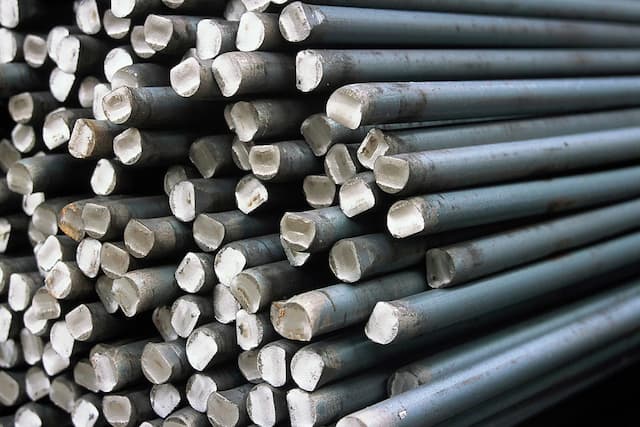
EN8 round bar guide covering properties, hardness, machinability, applications, and UAE sourcing fro...
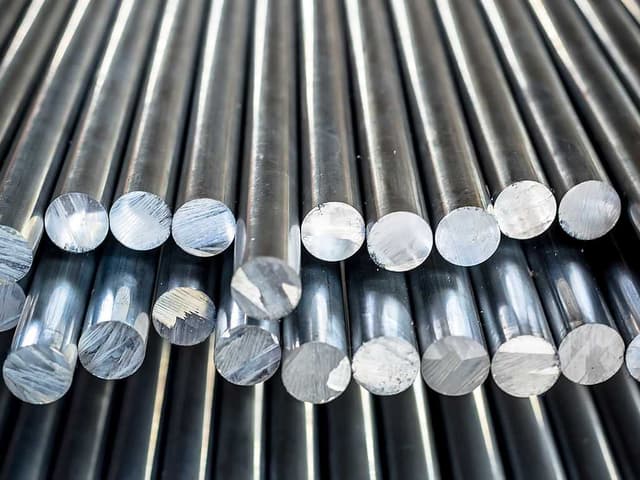
This guide provides a comprehensive overview of low carbon steel. We will examine its fundamental pr...
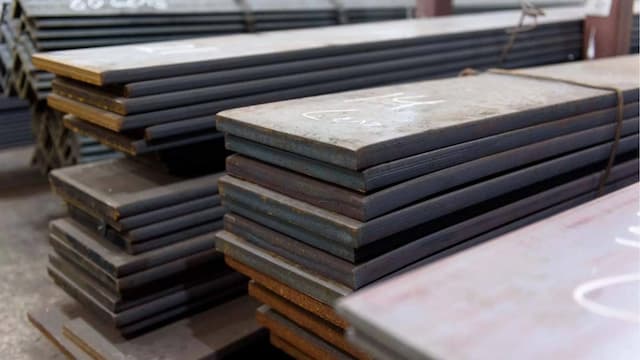
Understanding the difference between mild steel and carbon steel, or how alloy steel compares in str...
Selecting the wrong grade can lead to catastrophic component failure, increased machining costs, or ...




Elevate Your Projects with
with
 Our Superior Steels
