

Inconel 625 Properties – Composition, Hardness & Uses
At Nifty Alloys, we stock Inconel 625 sheets, plates, bars, pipes, and forgings, ensuring customers across industries receive quality-certified materials.
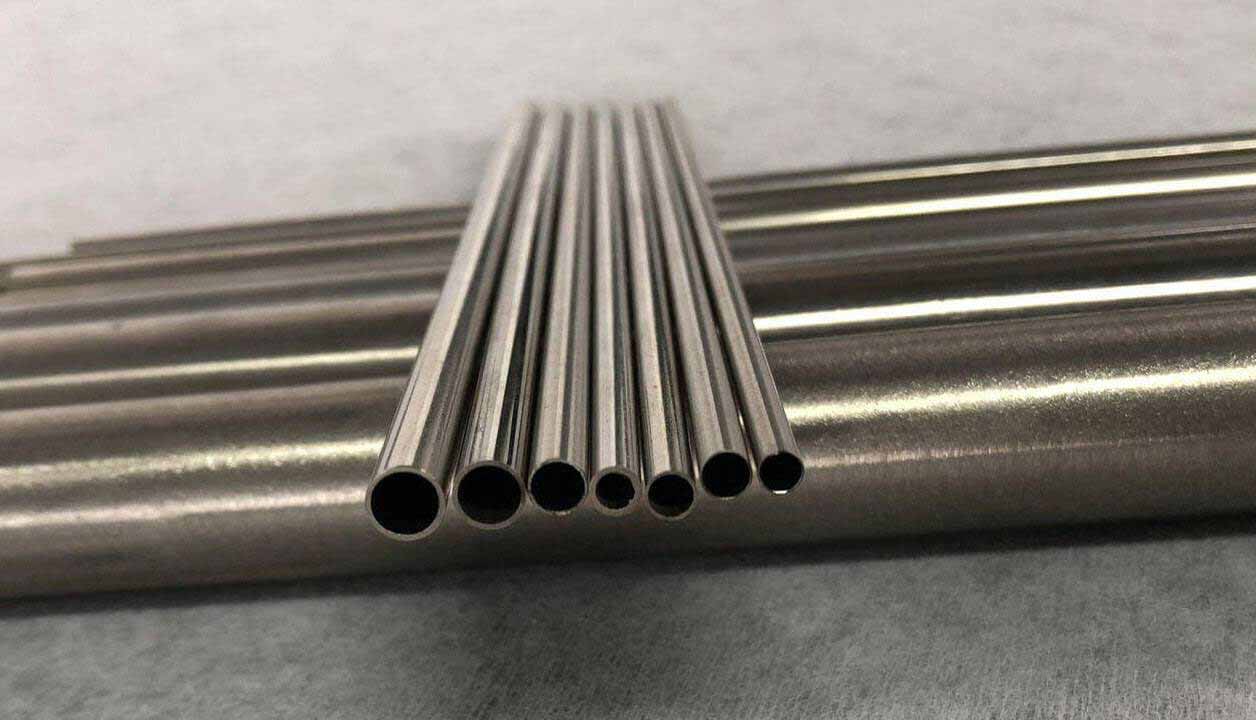
What is Inconel 625?
Inconel 625 is a high-performance nickel-based superalloy engineered for superior strength and corrosion resistance across a wide range of temperatures. Composed primarily of nickel, chromium, and molybdenum, with the addition of niobium for enhanced mechanical properties, this alloy is designed to withstand harsh environments, including chemical processing and marine conditions. Its key characteristics include excellent oxidation resistance, high tensile and yield strength, and stability at both cryogenic and elevated temperatures. Inconel 625 is widely used in demanding applications where reliability and material integrity are critical.
For detailed specifications or procurement information, you can refer directly to our Inconel 625 product page.
Inconel 625, also identified as UNS N06625 or Werkstoff Nr. 2.4856, is a nickel-chromium-molybdenum superalloy renowned for its exceptional performance in demanding environments. Strengthened by the addition of niobium, this material provides outstanding corrosion resistance, high strength from cryogenic temperatures up to 1000°C (1832°F), and excellent oxidation stability. Due to these characteristics, the Inconel 625 alloy has become a critical material in industries such as marine, aerospace, and chemical processing.
This guide provides a comprehensive overview of Inconel 625 material, detailing its chemical composition, mechanical and physical properties, heat treatment procedures, and common applications. By understanding the data, standards, and performance capabilities of Alloy 625 UNS, you can specify and procure this material with confidence for your most critical projects.
Inconel 625 Chemical Composition
The performance of Inconel 625 is directly linked to its precise elemental makeup. The high levels of nickel and chromium provide exceptional resistance to a wide range of corrosive media, while molybdenum and niobium contribute to its high strength without the need for precipitation hardening. This unique solid-solution strengthening mechanism makes the alloy robust and stable across a broad temperature range.
The chemical composition is standardized to ensure consistent performance and reliability. Below is a detailed breakdown of the elemental percentages for Inconel 625.
Element | Percentage (%) |
| Nickel (Ni) | 58 min |
| Chromium (Cr) | 20 – 23 |
| Molybdenum (Mo) | 8 – 10 |
| Niobium + Tantalum (Nb + Ta) | 3.15 – 4.15 |
| Iron (Fe) | ≤ 5.0 |
| Carbon (C) | ≤ 0.10 |
| Manganese (Mn) | ≤ 0.50 |
| Silicon (Si) | ≤ 0.50 |
| Sulphur (S) | ≤ 0.015 |
It is important to note that the Inconel 625 filler wire chemical composition closely matches that of the base alloy, ensuring strong, corrosion-resistant welds that maintain the integrity of the fabricated component.
Mechanical and Physical Properties
The Inconel 625 properties make it suitable for applications where both high strength and resistance to harsh environments are required. Its combination of tensile strength, ductility, and hardness ensures reliability under significant mechanical stress. The table below outlines the typical mechanical and physical properties of Inconel 625 in the annealed condition.
Property | Typical Value |
| Tensile Strength | ≈ 930 MPa |
| Yield Strength | ≈ 517 MPa |
| Elongation | 30 % |
| Hardness (Inconel 625 HRC) | ≈ 22 HRC (220 HB) |
| Density | 8.44 g/cm³ |
| Melting Point | 1290 – 1350 °C |
The specified Inconel 625 HRC (Hardness Rockwell C) value of approximately 22 reflects the material's annealed state, providing a good balance of strength and formability. This hardness level allows for effective machining and fabrication before any final heat treatments if required.
Inconel 625 Chemical Compatibility Chart
One of the primary advantages of Alloy 625 is its versatility in resisting corrosion from a wide variety of media, including both oxidizing and non-oxidizing environments. Its high nickel content, combined with chromium and molybdenum, makes it particularly resistant to chloride-ion stress-corrosion cracking, crevice corrosion, and pitting.
The following Inconel 625 chemical compatibility chart provides a general overview of its performance in common corrosive environments.
Medium | Compatibility |
| Seawater | Excellent |
| Hydrochloric Acid | Good (up to low conc.) |
| Nitric Acid | Excellent |
| Sulphuric Acid | Moderate |
| Phosphoric Acid | Good |
| Sodium Hydroxide | Excellent |
| Organic Acids | Excellent |
A critical note for specifiers: Always verify chemical compatibility for your specific operating conditions, as factors like temperature, pressure, and concentration significantly impact material performance.
Key Features and Advantages
The unique combination of elements in Inconel 625 gives it a set of features that translate into significant operational advantages. When you specify this alloy, you gain access to a material engineered for peak performance and longevity.
- High-Temperature Strength and Oxidation Resistance: It is highly resistant to oxidation and scaling at temperatures up to 1000°C (1832°F), making it ideal for high-temperature applications.
- Outstanding Corrosion Resistance: Inconel 625 offers superior resistance to corrosion in diverse environments, from high-purity water and neutral salts to seawater, alkaline media, and aggressive acids. It is particularly effective against pitting and crevice corrosion.
- Excellent Fatigue and Creep Strength: The alloy maintains its structural integrity under cyclic loading and high-temperature stress, providing excellent fatigue and creep-rupture strength.
- Non-Magnetic and Weldable: Inconel 625 is non-magnetic and is praised for its excellent weldability, allowing for complex fabrications without a loss of properties. It can be joined using various welding techniques.
- No Age Hardening Required: Its strength is derived from solid-solution strengthening, meaning it does not require a separate age-hardening heat treatment to achieve its properties. It retains its strength and ductility after solution annealing.
Inconel 625 Heat Treatment
Proper Inconel 625 heat treatment is crucial for optimizing the material's properties for a specific application. The main goal is typically to achieve a balance of strength, ductility, and corrosion resistance, or to relieve stresses induced during fabrication processes like forming or welding.
- Solution Annealing: This process is performed at a temperature range of 1100–1200 °C (2000–2200 °F), followed by a rapid quench in water or air. Solution annealing dissolves carbides and other phases, resulting in a homogenous microstructure with maximum ductility and corrosion resistance.
- Stress Relieving: To remove residual stresses, a treatment at 870–980 °C (1600–1800 °F) for a minimum of one hour is recommended. This process enhances dimensional stability without significantly altering the alloy's mechanical properties.
These treatments ensure that fabricated components made from Inconel 625 material will perform reliably and predictably in their intended service environment.
Inconel 625 Equivalent Grades and Standards
To ensure global interchangeability and compliance, Inconel 625 is manufactured according to several international standards. Knowing these equivalent grades is essential for procurement and engineering specifications.
Standard | Equivalent Grade |
| UNS | N06625 |
| Werkstoff Nr. | 2.4856 |
| ASTM | B443, B444, B446, B564 |
| ASME | SB-443, SB-444, SB-446 |
| EN | NiCr22Mo9Nb |
| AFNOR | NC22DNiMoNb |
These designations are referenced in mill test certificates and ensure that the material you procure meets the required chemical and mechanical specifications for your project, whether it's an Inconel 625 bar for machining or plate for fabrication.
Applications of Inconel 625
The robust properties of Alloy 625 UNS make it a first-choice material for a wide array of demanding industrial applications. For a detailed overview of available grades and specifications, you can refer to the Inconel 625 product page.
- Aerospace: Components like exhaust ducts, turbine seals, thrust-reverser systems, and fuel lines benefit from its high-temperature strength and fatigue resistance.
- Marine & Offshore: Its exceptional resistance to seawater corrosion makes it ideal for seawater piping, flexible joints, propeller shafts, and subsea connectors.
- Chemical Processing: Used extensively for manufacturing reactors, heat exchangers, scrubbers, and tanks that handle aggressive acids and alkaline solutions.
- Power Generation: Key components in gas turbines, boiler feed systems, and flue-gas desulfurization (FGD) systems rely on its high-temperature stability and corrosion resistance.
- Oil & Gas: Employed in downhole tubing, bellows, flare stacks, and transfer piping where resistance to sour gas and high pressures is critical.
Inconel 625 vs. Inconel 718: A Comparison
While both are high-performance nickel alloys, Inconel 625 and Inconel 718 are designed for different operational needs. Inconel 718 is a precipitation-hardenable alloy, giving it extremely high yield, tensile, and creep-rupture properties up to about 700°C (1300°F). In contrast, Inconel 625 is a solid-solution strengthened alloy with superior corrosion resistance and a higher maximum service temperature.
The choice between them depends entirely on the application's primary requirements—strength at moderate temperatures or corrosion resistance at higher temperatures.
Property | Inconel 625 | Inconel 718 |
| Strength Mechanism | Solid Solution | Precipitation Hardened |
| Max Service Temp. | ≈ 1000 °C | ≈ 700 °C |
| Corrosion Resistance | Superior | High |
| Weldability | Excellent | Good |
Available Forms at Nifty Alloys LLC
As a leading stockist and supplier of Alloy 625 UNS materials in the UAE, Nifty Alloys LLC maintains a comprehensive inventory to serve your requirements. Industry professionals consistently rely on the company's integrity and responsiveness for projects demanding precision and compliance.
Available forms include:
- Inconel 625 Bar (Round / Hex / Square)
- Plates & Sheets
- Pipes, Tubes, Forgings, Flanges, and Filler Wire
Nifty Alloys LLC is dedicated to delivering nickel and super alloys that fully meet international material standards and project specifications.
 Let's Talk
Oil and gas relies mainly on carbon and low-alloy steels, upgraded to corrosion-resistant alloys whe...

Super duplex is used in firewater and seawater piping because its PREN of 40 or more resists pitting...
A complete nickel alloy bar order states the UNS number, the ASTM or ASME product standard and grade...
Alloy 825 is a nickel-iron-chromium alloy with 2.5–3.5% molybdenum plus copper, suited to sulfuric a...




Elevate Your Projects with
with
 Our Superior Steels
