

Phosphor Bronze vs Aluminum Bronze: Key Differences, Properties, and Applications
Phosphor bronze vs aluminum bronze: Aluminum bronze is stronger, more corrosion-resistant, and ideal for marine and heavy-duty applications, while phosphor bronze offers superior elasticity, fatigue resistance, and electrical conductivity, making it better for springs and electrical components.
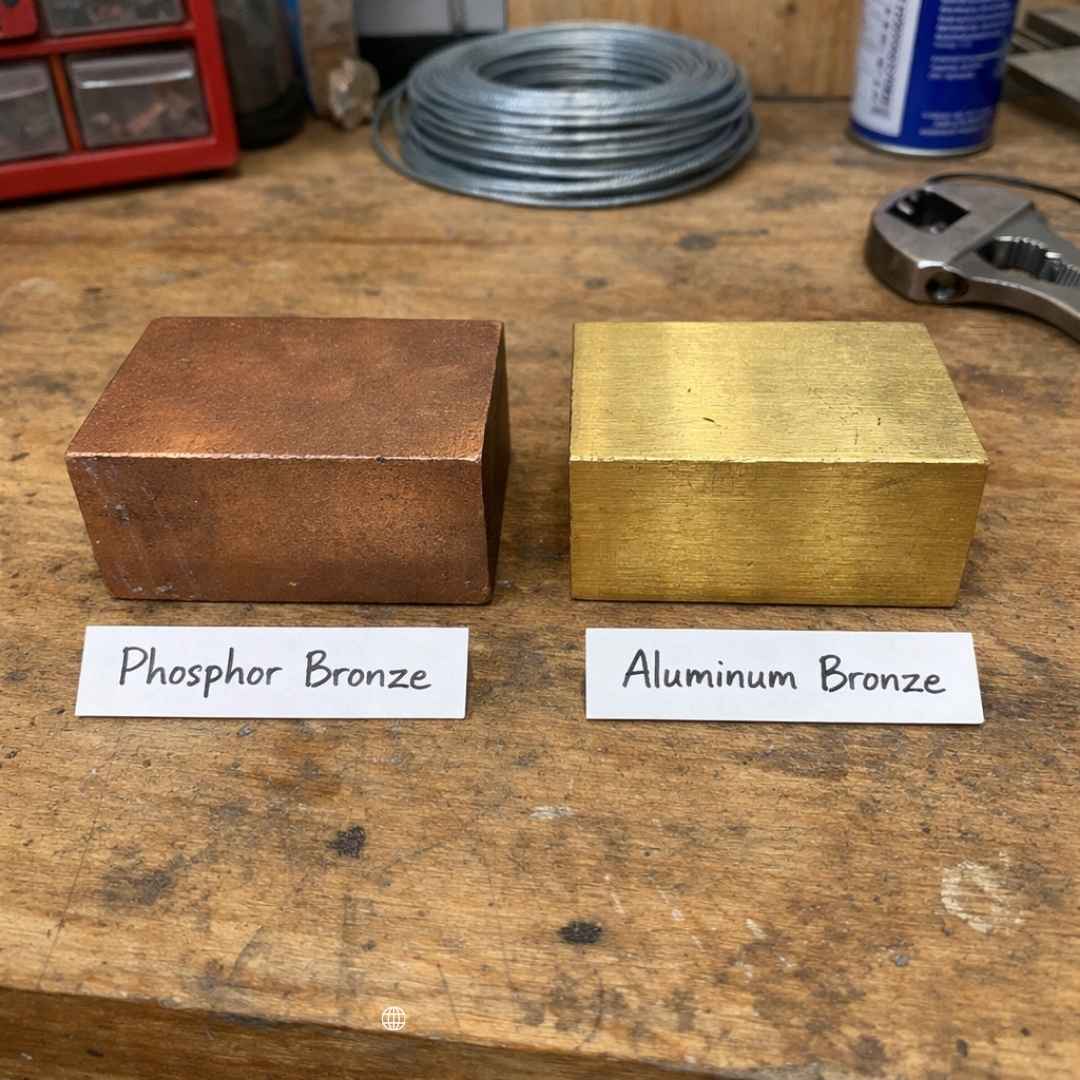
When comparing phosphor bronze vs aluminum bronze, both are high-performance copper alloys widely used in engineering and industrial applications. However, they serve different purposes due to their unique mechanical and chemical properties.
- Aluminum bronze = higher strength, excellent corrosion resistance
- Phosphor bronze = better flexibility, fatigue resistance, and conductivity
Understanding the difference between phosphor bronze and aluminum bronze helps engineers and procurement professionals choose the right material for performance, durability, and cost efficiency.
What is Phosphor Bronze?
Phosphor bronze is a copper alloy primarily composed of copper (Cu), tin (Sn), and phosphorus (P).
Key Properties
- High fatigue resistance
- Excellent wear resistance
- Good electrical conductivity
- Low friction coefficient
- High elasticity
Applications
Phosphor bronze is widely used in:
- Springs and fasteners
- Electrical connectors and contacts
- Bearings and bushings
- Precision instruments
Due to its ability to withstand repeated stress, it is a preferred material in applications requiring long-term durability and flexibility.
What is Aluminum Bronze?
Aluminum bronze is a copper alloy containing aluminum (Al) along with elements like iron (Fe) and nickel (Ni).
Key Properties
- Very high strength (up to ~1100 MPa)
- Outstanding corrosion resistance, especially in seawater
- Excellent wear and abrasion resistance
- Good thermal stability
- Moderate conductivity
Applications
Aluminum bronze is commonly used in:
- Marine components (propellers, valves, pumps)
- Heavy machinery parts
- Industrial equipment
- Oil & gas components
Its resistance to harsh environments makes it ideal for marine and offshore applications.
Phosphor Bronze vs Aluminum Bronze (Comparison Table)
Property | Phosphor Bronze | Aluminum Bronze |
| Strength | Moderate | Very high (up to ~1100 MPa) |
| Corrosion Resistance | Good | Excellent (especially marine) |
| Elasticity | High | Moderate |
| Conductivity | Better | Lower |
| Fatigue Resistance | Excellent | Good |
| Cost | Moderate | Higher |
In summary, aluminum bronze vs phosphor bronze shows that aluminum bronze excels in strength and corrosion resistance, while phosphor bronze stands out in flexibility and fatigue performance.
Difference Between Phosphor Bronze and Aluminum Bronze Explained
1. Mechanical Properties
- Aluminum bronze offers significantly higher strength and hardness, making it suitable for load-bearing applications.
- Phosphor bronze provides superior elasticity and fatigue resistance, ideal for dynamic applications like springs.
2. Corrosion Resistance
- Aluminum bronze performs exceptionally well in marine and chemical environments.
- Phosphor bronze has good corrosion resistance but is not as robust in seawater conditions.
3. Electrical Conductivity
- Phosphor bronze has better electrical conductivity, making it suitable for electrical components.
- Aluminum bronze has lower conductivity due to alloying elements.
4. Cost Consideration
- Aluminum bronze is generally more expensive due to its alloy composition and performance benefits.
- Phosphor bronze is more cost-effective for applications not requiring extreme strength.
Applications Comparison
Aluminum Bronze Applications
Aluminum bronze is widely used in heavy-duty and corrosive environments:
- Marine components (propellers, pumps, valves)
- Offshore platforms
- Heavy machinery parts
- Industrial equipment
Its strength and resistance make it ideal for harsh and high-load environments.
Phosphor Bronze Uses
Phosphor bronze is preferred in precision and electrical applications:
- Springs and clips
- Electrical connectors and terminals
- Bearings and bushings
- Instrumentation components
Its excellent fatigue resistance makes it ideal for repetitive motion and electrical systems.
Which is Better: Phosphor Bronze or Aluminum Bronze?
The answer depends on your application requirements:
Choose Aluminum Bronze if you need:
- High strength and durability
- Marine or corrosive environment resistance
- Heavy-duty industrial performance
Choose Phosphor Bronze if you need:
- High elasticity and fatigue resistance
- Electrical conductivity
- Precision components
In short, which is better phosphor bronze or aluminum bronze depends on whether your priority is strength (aluminum bronze) or flexibility and conductivity (phosphor bronze).
Buy Phosphor Bronze & Aluminum Bronze in UAE
If you are sourcing high-quality bronze alloys in the UAE or GCC region, it’s essential to choose a reliable supplier.
At Nifty Alloys LLC, you can find:
- Phosphor bronze and aluminum bronze rods, sheets, and plates
- Mill Test Certificates (MTC) for quality assurance
- Ready stock for fast delivery across UAE and GCC
Explore our full range of bronze alloys here: https://niftyalloys.com/products/bronze-alloys
You can also explore related engineering material insights: https://niftyalloys.com/blogs/tool-steel-guide
FAQ
1. Which is stronger: aluminum bronze or phosphor bronze?
Aluminum bronze is significantly stronger, with tensile strength reaching up to ~1100 MPa, making it suitable for heavy-duty applications.
2. Which is better for marine use?
Aluminum bronze is better for marine environments due to its excellent resistance to seawater corrosion.
3. Is phosphor bronze good for electrical applications?
Yes, phosphor bronze is widely used in electrical connectors and contacts due to its good conductivity and fatigue resistance.
4. What is the main difference between phosphor bronze and aluminum bronze?
The main difference lies in performance: aluminum bronze offers higher strength and corrosion resistance, while phosphor bronze provides better elasticity and conductivity.
5. Which is more cost-effective?
Phosphor bronze is generally more cost-effective for standard applications, while aluminum bronze justifies its higher cost in demanding environments.
Conclusion
Understanding phosphor bronze vs aluminum bronze properties is essential for selecting the right material for your application. While aluminum bronze dominates in strength and corrosion resistance, phosphor bronze excels in flexibility and electrical performance. Choosing the right alloy ensures better performance, longer service life, and cost efficiency in your engineering projects.
 Let's Talk
A complete nickel alloy bar order states the UNS number, the ASTM or ASME product standard and grade...
Alloy 825 is a nickel-iron-chromium alloy with 2.5–3.5% molybdenum plus copper, suited to sulfuric a...
Carbon equivalent (Ceq) is calculated using the IIW formula — CEV = C + Mn/6 + (Cr+Mo+V)/5 + (Ni+Cu)...
metal magnetism What Is a Ferrous Metal? Ferrous vs Non-Ferrous Explained Quick Answer ...




Elevate Your Projects with
with
 Our Superior Steels
