

D2 vs A2 vs O1 vs H13 vs P20 Tool Steel – Differences & Uses
D2, A2, O1, H13, and P20 tool steels differ in wear resistance, toughness, and heat resistance. D2 offers maximum wear resistance, A2 provides excellent dimensional stability, H13 performs best in high-temperature applications, O1 is ideal for general tooling, and P20 is widely used for plastic molds.
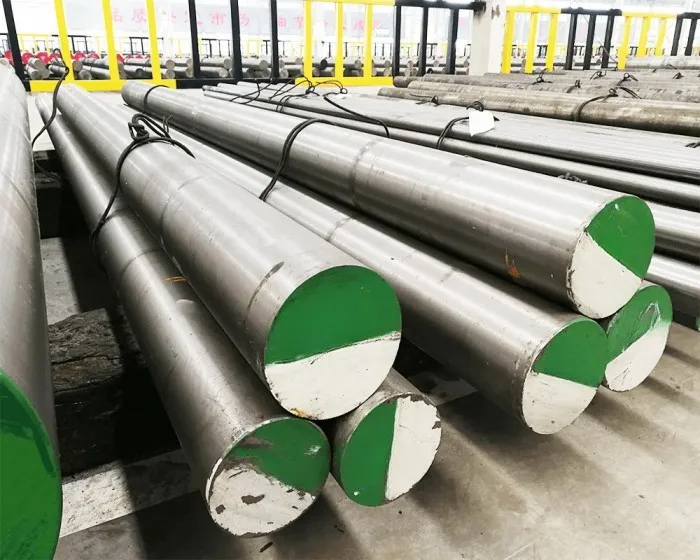
Tool steel is a specialized category of alloy steel engineered for high wear resistance, strength, and durability under extreme working conditions. These steels are widely used in manufacturing industries for tools, dies, molds, and cutting applications.
Choosing the right tool steel grade is critical for ensuring longer tool life, consistent performance, and cost efficiency. With multiple grades available, understanding the difference between D2, A2, O1, H13, and P20 tool steel helps engineers, procurement managers, and manufacturers make informed decisions.
If you are sourcing high-performance materials, selecting the correct grade based on application requirements is essential.
Tool Steel Composition & Properties
Tool steels achieve their performance through alloying elements such as carbon, chromium, molybdenum, and vanadium.
Grade | Hardness (HRC) | Key Feature | Best For |
| O1 | 58–62 | Oil hardening | General tooling |
| A2 | 57–62 | Air hardening | Precision dies |
| D2 | 55–62 | High wear resistance | Stamping tools |
| H13 | 46–52 | Heat resistance | Hot work tools |
| P20 | 28–34 | Pre-hardened | Plastic molds |
Key Material Insights:
- D2 tool steel → High chromium content gives superior wear resistance
- A2 tool steel → Offers excellent dimensional stability
- H13 tool steel → Performs well in high-temperature environments
- P20 tool steel → Pre-hardened and easy to machine
- O1 tool steel → Balanced toughness and hardness
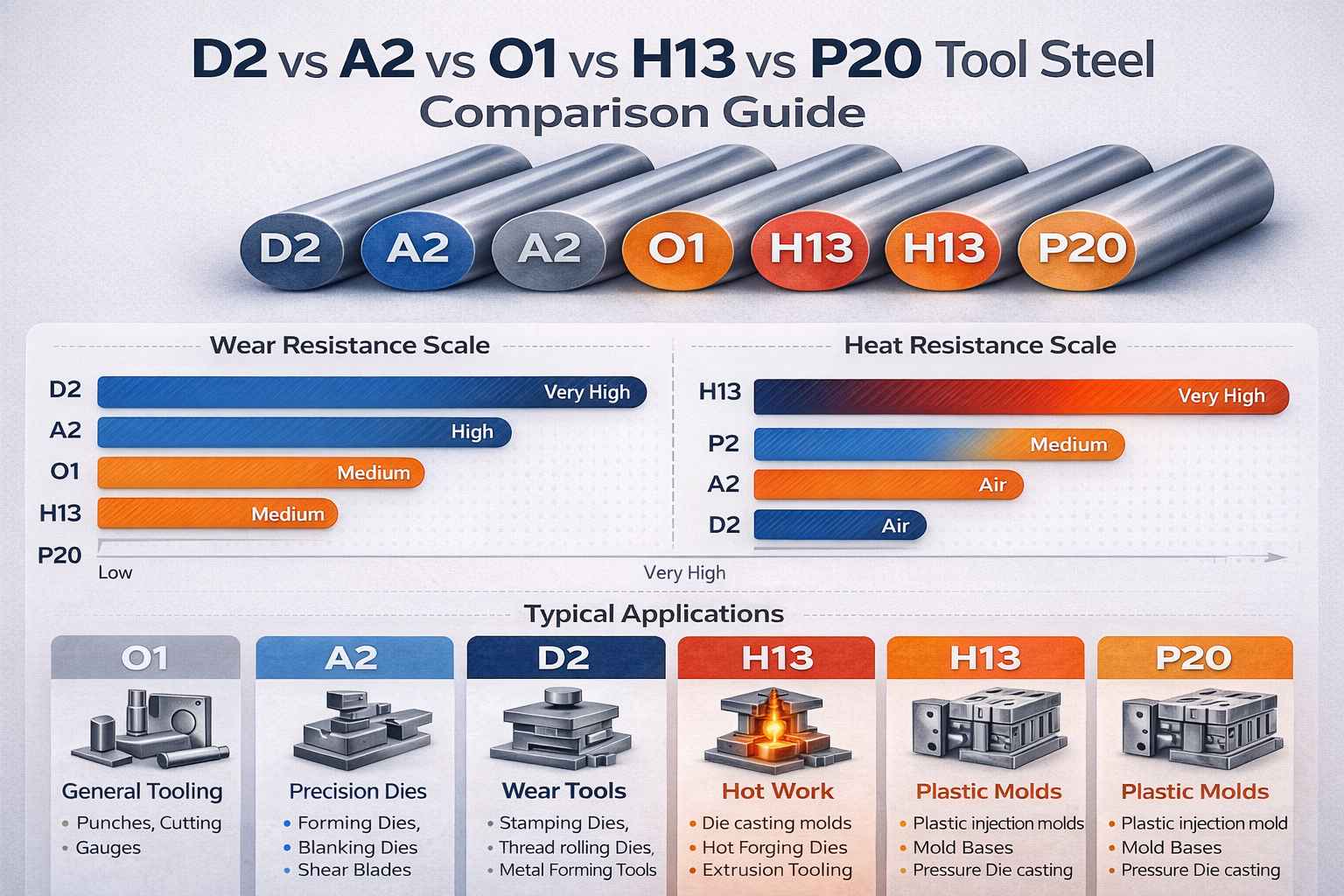
A2 vs D2 Tool Steel
D2 tool steel provides higher wear resistance, while A2 tool steel offers better toughness and dimensional stability.
Property | A2 | D2 |
| Wear Resistance | High | Very High |
| Toughness | Medium | Lower |
| Distortion | Low | Moderate |
| Application | Precision dies | Wear tools |
- Choose D2 for long tool life
- Choose A2 for precision applications
D2 vs O1 Tool Steel
D2 is more wear-resistant, while O1 is tougher and easier to machine.
Property | O1 | D2 |
| Wear Resistance | Medium | Very High |
| Toughness | High | Medium |
| Machinability | Good | Moderate |
| Cost | Lower | Higher |
- O1 is suitable for general-purpose tools
- D2 is best for high wear environments
H13 vs P20 Tool Steel
H13 is ideal for high-temperature applications, while P20 is preferred for mold manufacturing.
Property | H13 | P20 |
| Heat Resistance | Very High | Medium |
| Hardness | Medium | Low |
| Application | Forging, die casting | Injection molds |
- Choose H13 for hot work
- Choose P20 for plastic molds
Heat Treatment of Tool Steel
Heat treatment is essential to enhance hardness, toughness, and wear resistance.
- O1 → Oil quenching and tempering
- A2 → Air hardening with minimal distortion
- D2 → Controlled tempering due to high carbide content
- H13 → Preheating, austenitizing, air quenching, double tempering
- P20 → Supplied pre-hardened
Proper heat treatment ensures optimal performance and durability in industrial applications.
Tool Steel Comparison Chart
Grade | Wear Resistance | Toughness | Heat Resistance | Best Use |
| O1 | Medium | High | Low | General tools |
| A2 | High | Medium | Medium | Precision dies |
| D2 | Very High | Medium | Low | Wear-resistant tools |
| H13 | High | High | Very High | Hot work |
| P20 | Medium | High | Medium | Molds |
How to Select the Right Tool Steel
Selecting the correct tool steel depends on:
- Wear resistance requirements
- Operating temperature
- Dimensional stability
- Machinability
Quick Selection Guide:
- Choose D2 → Maximum wear resistance
- Choose A2 → Precision tooling
- Choose O1 → General applications
- Choose H13 → High-temperature environments
- Choose P20 → Mold manufacturing
Tool Steel Supply
Looking for reliable tool steel suppliers? Explore our D2 Tool Steel range Check A2 Tool Steel for precision dies View H13 Tool Steel for hot work applications At Nifty Alloys LLC, we supply tool steels in:
- Round bars
- Plates
- Sheets
- Custom sizes
With fast delivery across UAE, GCC, and global markets.
Conclusion
Selecting the right tool steel is not just about material properties—it directly impacts tool life, production efficiency, and overall manufacturing costs. Each grade—D2, A2, O1, H13, and P20—serves a specific purpose, and understanding their differences allows for smarter material selection. For industries where precision, durability, and performance are critical, choosing the correct tool steel can significantly reduce downtime and improve operational efficiency. By aligning material properties with application requirements, businesses can achieve better productivity and long-term cost savings.
Need help selecting the right tool steel? Contact Nifty Alloys LLC today for expert guidance, stock availability, and competitive pricing.
Frequently Asked Questions
Which tool steel has the highest wear resistance?
- D2 tool steel offers the highest wear resistance due to its high carbon and chromium content.
What is the best tool steel for dies?
- A2 and D2 are commonly used depending on whether toughness or wear resistance is required.
Which tool steel is used for high-temperature applications?
- H13 tool steel is ideal due to its excellent heat resistance and thermal fatigue strength.
What is P20 tool steel used for?
- P20 is widely used for plastic injection molds and mold bases.
 Let's Talk
Oil and gas relies mainly on carbon and low-alloy steels, upgraded to corrosion-resistant alloys whe...

Super duplex is used in firewater and seawater piping because its PREN of 40 or more resists pitting...
A complete nickel alloy bar order states the UNS number, the ASTM or ASME product standard and grade...
Alloy 825 is a nickel-iron-chromium alloy with 2.5–3.5% molybdenum plus copper, suited to sulfuric a...




Elevate Your Projects with
with
 Our Superior Steels
