

316 Stainless Steel / UNS S31600: Properties & Uses Guide
Learn SS 316 / UNS S31600 properties, composition, corrosion resistance, 316 vs 304, 316L differences, ASTM standards, and UAE buying guidance.
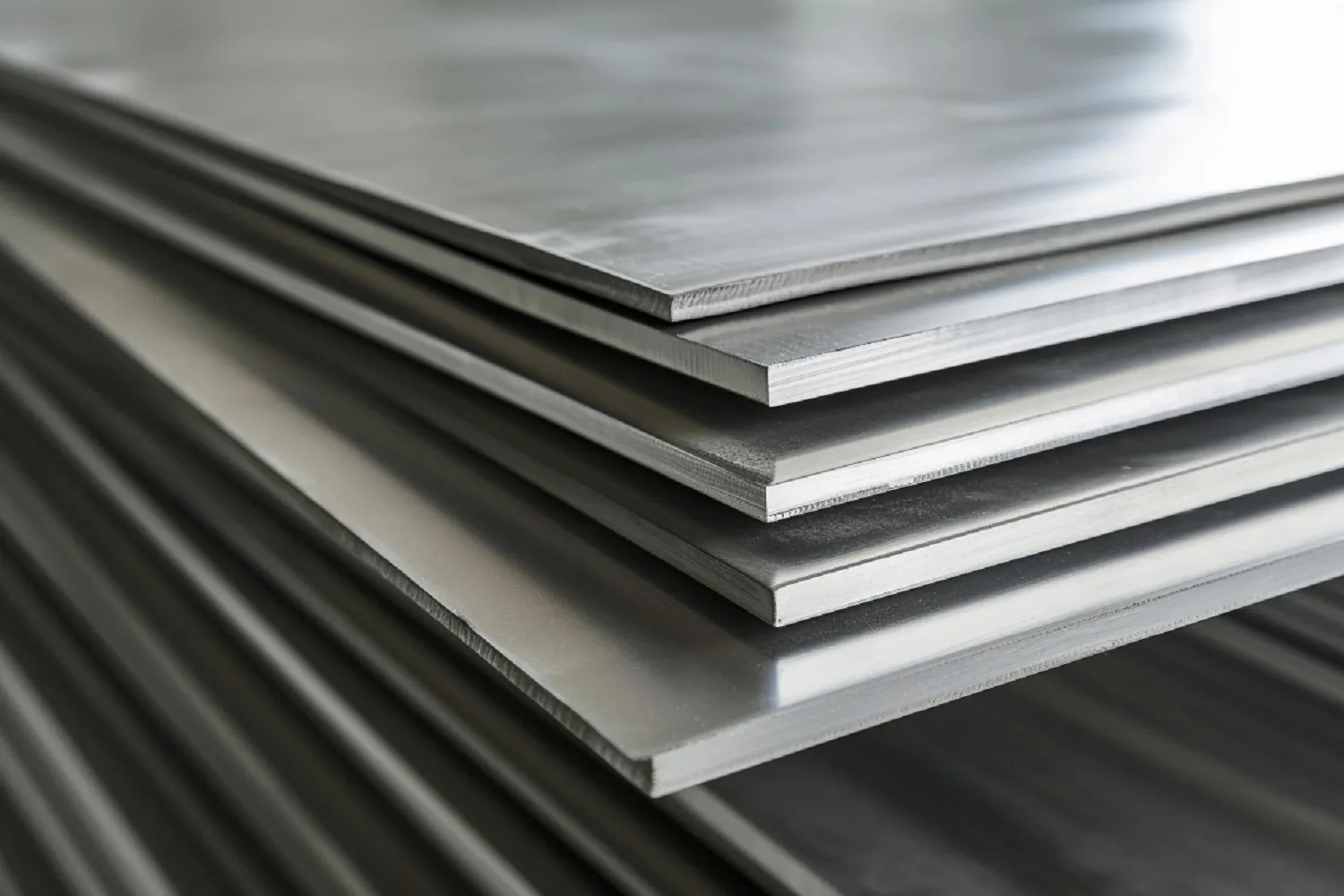
316 stainless steel / UNS S31600 is a molybdenum-bearing austenitic stainless steel used where better chloride corrosion resistance is required than standard 304 stainless steel. It is commonly specified for marine, chemical, food processing, pharmaceutical, and industrial environments where pitting and crevice corrosion resistance matter. Nifty Alloys supplies certified stainless steel materials across the UAE, Middle East, GCC, and global export markets, supporting buyers with grade selection, standards clarification, MTC coordination, and stock availability. In UAE and Gulf projects, 316 stainless steel is often selected for humid, coastal, desalination, marine, and process-industry exposure where 304 may be insufficient.
Need certified SS 316 material? View our 316 stainless steel supplier in UAE page for stock, sizes, standards, MTC support, and global delivery assistance.
What Is 316 Stainless Steel / UNS S31600?
316 stainless steel / UNS S31600 is an austenitic chromium-nickel-molybdenum stainless steel grade designed for improved corrosion resistance compared with 304 stainless steel. It is commonly associated with EN 1.4401, ASTM A240 plate/sheet, ASTM A276 bar, and JIS SUS 316 designations. The molybdenum addition improves resistance to pitting and crevice corrosion, especially in chloride-containing environments.

316 Stainless Steel Chemical Composition
316 stainless steel contains chromium, nickel, and molybdenum as its main alloying elements. The molybdenum content is the key difference that gives 316 better chloride resistance than 304 stainless steel.
| Element | Typical Range / Limit | Why It Matters |
|---|---|---|
| Carbon, C | ≤ 0.08% | Higher carbon can increase sensitization risk after welding |
| Chromium, Cr | 16.0–18.0% | Forms the passive corrosion-resistant oxide layer |
| Nickel, Ni | 10.0–14.0% | Supports austenitic structure and toughness |
| Molybdenum, Mo | 2.0–3.0% | Improves pitting and crevice corrosion resistance |
| Manganese, Mn | ≤ 2.0% | Supports steelmaking and structure control |
| Silicon, Si | ≤ 1.0% | Helps oxidation resistance and deoxidation |
| Phosphorus, P | ≤ 0.045% | Controlled impurity |
| Sulfur, S | ≤ 0.030% | Controlled impurity; affects machinability |
For procurement, always confirm the exact chemistry on the mill test certificate rather than relying only on nominal grade names. Nifty Alloys can support buyers with MTC review, grade traceability, and standard matching for 316 stainless steel requirements.
Key Properties of 316 Stainless Steel
316 stainless steel is valued for corrosion resistance, toughness, weldability, and service reliability in moderately aggressive environments. It is not the highest-alloy stainless option, but it provides a strong balance of performance, cost, and availability.
| Property | Typical Value / Behaviour | Buyer Note |
|---|---|---|
| Structure | Austenitic stainless steel | Generally non-hardenable by heat treatment |
| Density | About 8.0 g/cm³ | Similar to other 300-series stainless grades |
| Corrosion resistance | Better than 304 in chloride exposure | Useful for coastal, marine, and chemical environments |
| Toughness | Excellent, including low temperatures | Suitable for many structural and process applications |
| Weldability | Good | Consider 316L where welding or sensitization risk is important |
| Magnetic response | Generally non-magnetic annealed, may become slightly magnetic after cold work | Important for instrument or magnetic-sensitive applications |
| Heat treatment | Cannot be hardened by heat treatment | Strength is increased mainly by cold working |
Grade 316 is widely recognized as a molybdenum-bearing austenitic stainless steel with better pitting and crevice corrosion resistance than 304, especially in chloride environments.
316 Stainless Steel Equivalents and Designations
316 stainless steel is known by different names across UNS, EN, DIN, JIS, and ASTM systems. These equivalents are useful for international procurement, but buyers should still confirm the full standard, product form, and MTC chemistry.
| System | Common Designation |
|---|---|
| UNS | S31600 |
| AISI / SAE | 316 |
| EN Number | 1.4401 |
| EN Name | X5CrNiMo17-12-2 |
| JIS | SUS 316 |
| Common description | 18Cr-12Ni-Mo stainless steel |
For UAE, Middle East, and global projects, this matters because purchase orders may reference UNS, EN, ASTM, or JIS naming depending on the consultant, EPC, end user, or origin of the equipment package.
ASTM and EN Standards for 316 Stainless Steel
316 stainless steel must be ordered by both grade and product standard. “316” alone is not enough because plate, sheet, bar, pipe, fittings, and fasteners may follow different specifications.
| Product Form | Common Standard Examples | Procurement Note |
|---|---|---|
| Plate / Sheet / Strip | ASTM A240 / ASME SA240 | Covers chromium and chromium-nickel stainless plate, sheet, and strip for pressure vessels and general applications |
| Round Bar / Hex Bar / Square Bar | ASTM A276 | Covers hot-finished or cold-finished stainless bars and shapes, including rounds, squares, hexagons, angles, tees, and channels |
| Forgings | ASTM A182 | Often used for forged fittings, flanges, and pressure components |
| Seamless / Welded Pipe | ASTM A312 | Common for stainless pressure piping |
| EN Long Products | EN 10088-3 | Used for stainless steel bars, rods, wire, sections, and bright products |
| Fasteners | ISO 3506 A4 family | A4 fasteners are commonly associated with molybdenum-bearing stainless grades |
When requesting a quotation, include grade, UNS number, form, size, standard, quantity, finish, tolerance, MTC requirement, and delivery destination. This helps Nifty Alloys check stock availability and offer suitable alternatives if the exact specification is not immediately available.
316 vs 304 Stainless Steel
316 stainless steel is usually chosen over 304 when chloride corrosion resistance is more important than lowest material cost. The molybdenum in 316 improves resistance to pitting and crevice corrosion, while 304 remains a practical option for less aggressive indoor or general-purpose environments.
| Factor | 304 Stainless Steel | 316 Stainless Steel / UNS S31600 |
|---|---|---|
| Main alloy difference | Chromium-nickel stainless | Chromium-nickel-molybdenum stainless |
| Molybdenum | Typically none | Typically 2.0–3.0% |
| Chloride resistance | Moderate | Better than 304 |
| Coastal / marine suitability | Limited depending on exposure | Better choice for many coastal and marine uses |
| Cost | Usually lower | Usually higher |
| Availability | Very common | Common, but grade/form availability varies |
| Best use | General fabrication, indoor, food, architectural | Marine, chemical, coastal, pharmaceutical, process equipment |
Use 316 when the environment includes salt spray, chlorides, marine atmosphere, chemical exposure, or cleaning agents that increase corrosion risk. Use 304 where the environment is mild and project cost is a stronger driver.
For buyers comparing both grades, Nifty Alloys can help clarify whether 304 stainless steel or 316 stainless steel is more suitable based on exposure, standards, and documentation requirements.
316 vs 316L Stainless Steel
316L stainless steel is the low-carbon version of 316 and is often preferred for welded applications. If the project involves welding, pressure equipment, chemical service, or sensitization concerns, 316L / UNS S31603 may be specified instead of standard 316 / UNS S31600.
| Grade | UNS | Main Difference | When to Choose |
|---|---|---|---|
| 316 | S31600 | Standard carbon version | General corrosion-resistant applications |
| 316L | S31603 | Lower carbon | Welded structures, pressure equipment, corrosion-critical service |
| 316H | S31609 | Higher carbon range | Elevated-temperature applications where specified |
Where project specifications call for 316L, do not substitute 316 without written approval from the engineer, consultant, or end user.
Common Applications of 316 Stainless Steel in UAE and Global Projects
316 stainless steel is used where moisture, chemicals, chlorides, hygiene, and long service life are important. It is especially relevant in coastal UAE, desalination, marine, oil and gas, process, and infrastructure environments.
| Industry | Typical Uses | Why 316 Is Selected |
|---|---|---|
| Marine and coastal | Fasteners, brackets, fittings, handrails, exposed components | Better resistance to salt-containing atmospheres than 304 |
| Chemical processing | Tanks, valves, pumps, process parts | Resistance to many corrosive process environments |
| Food and beverage | Processing equipment, contact parts, washdown areas | Cleanability and corrosion resistance |
| Pharmaceutical | Hygienic equipment, fittings, process components | Clean surface requirements and corrosion resistance |
| Oil and gas | Instrumentation parts, pipework, supports, fittings | Better performance in corrosive service conditions |
| Architecture | Coastal cladding, exterior fixtures, balustrades | Appearance plus improved corrosion resistance |
For projects requiring related corrosion-resistant alloys, buyers may also compare duplex stainless steel, nickel alloys, or copper alloys depending on temperature, chloride level, strength, and budget.
Limitations of 316 Stainless Steel
316 stainless steel is corrosion resistant, but it is not immune to all corrosion. Severe chloride exposure, stagnant seawater, poor drainage, crevices, high temperatures, and aggressive chemicals can still cause pitting, crevice corrosion, or stress corrosion cracking.
Avoid assuming 316 is automatically suitable for every marine or chemical environment. For highly aggressive chloride service, duplex stainless steels, super duplex stainless steels, 904L, 6Mo grades, or nickel alloys may be required depending on design conditions.
This is especially important in Gulf applications where heat, humidity, coastal salts, and cleaning chemicals may combine. Material selection should consider exposure, temperature, mechanical load, fabrication method, maintenance access, and required design life.
What to Check Before Buying 316 Stainless Steel
Before buying 316 stainless steel, confirm the full specification rather than asking only for “SS 316.” This reduces the risk of wrong material, missing documentation, unsuitable form, or rejected inspection.
| Buyer Check | Why It Matters |
|---|---|
| Grade and UNS | Confirm 316 / UNS S31600 or required alternative such as 316L / UNS S31603 |
| Product form | Plate, sheet, round bar, pipe, tube, fittings, flanges, or fasteners |
| Standard | ASTM A240, ASTM A276, ASTM A312, ASTM A182, EN 10088, or project-specific standard |
| Size and tolerance | Prevents mismatch during installation or machining by third parties |
| Finish | Important for hygiene, appearance, or corrosion performance |
| MTC requirement | Confirms chemistry, heat number, mechanical properties, and traceability |
| Quantity and delivery location | Supports accurate stock check, packing, and logistics |
| End-use environment | Helps identify whether 316, 316L, duplex, or another alloy is more suitable |
Need 316 stainless steel in the UAE or for international delivery? Request a quote from Nifty Alloys for certified stock, standards, sizes, MTCs, and supply support.
What to Look for in a 316 Stainless Steel Supplier
A reliable 316 stainless steel supplier should understand grade equivalents, standards, documentation, and application risk. For industrial buyers, the cheapest offer is not always the safest choice if the material lacks traceability or does not match the required specification.
Look for a supplier that can support:
- Grade confirmation: 316 / UNS S31600 / EN 1.4401 / SUS 316.
- Product form availability: plate, sheet, bar, pipe, tube, fittings, or related forms.
- Standard matching: ASTM, ASME, EN, DIN, JIS, or project specifications.
- MTC and traceability support.
- Clear delivery and export coordination.
- Practical guidance when 316L, duplex, or nickel alloy alternatives are more appropriate.
Nifty Alloys is a UAE-based material stockist and supplier supporting buyers across the UAE, Middle East, GCC, and global export markets with stainless steel, nickel alloys, copper alloys, bronze, brass, aluminium bronze, and industrial materials.
Contact Nifty Alloys for certified 316 stainless steel stock, technical support, MTC coordination, and fast material supply across the UAE, Middle East, GCC, and global export markets.
 Let's Talk
Petrochemical plants use 304L and 316L for general process service, 321 and 347 for high-temperature...
Aircraft use aluminium because it is about one-third the density of steel while offering good streng...
Oil and gas relies mainly on carbon and low-alloy steels, upgraded to corrosion-resistant alloys whe...
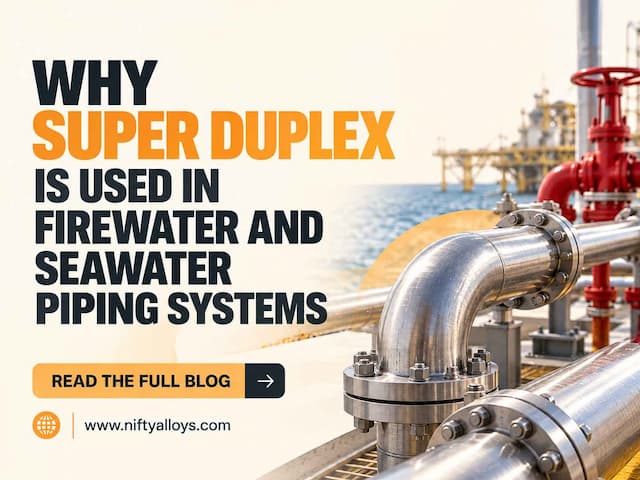
Super duplex is used in firewater and seawater piping because its PREN of 40 or more resists pitting...




Elevate Your Projects with
with
 Our Superior Steels
