

What Is Stainless Steel? Grades, Properties, and Applications
Stainless steel is one of the most widely utilized materials in modern engineering and construction, valued for its exceptional durability, corrosion resistance, and aesthetic appeal. Its unique properties make it indispensable across numerous industries, from oil and gas production to food processing. For procurement managers and engineers in the UAE, understanding the fundamentals of stainless steel is critical for selecting the correct grade and ensuring project success. This guide provides a detailed explanation of its composition, properties, common types, and industrial applications.
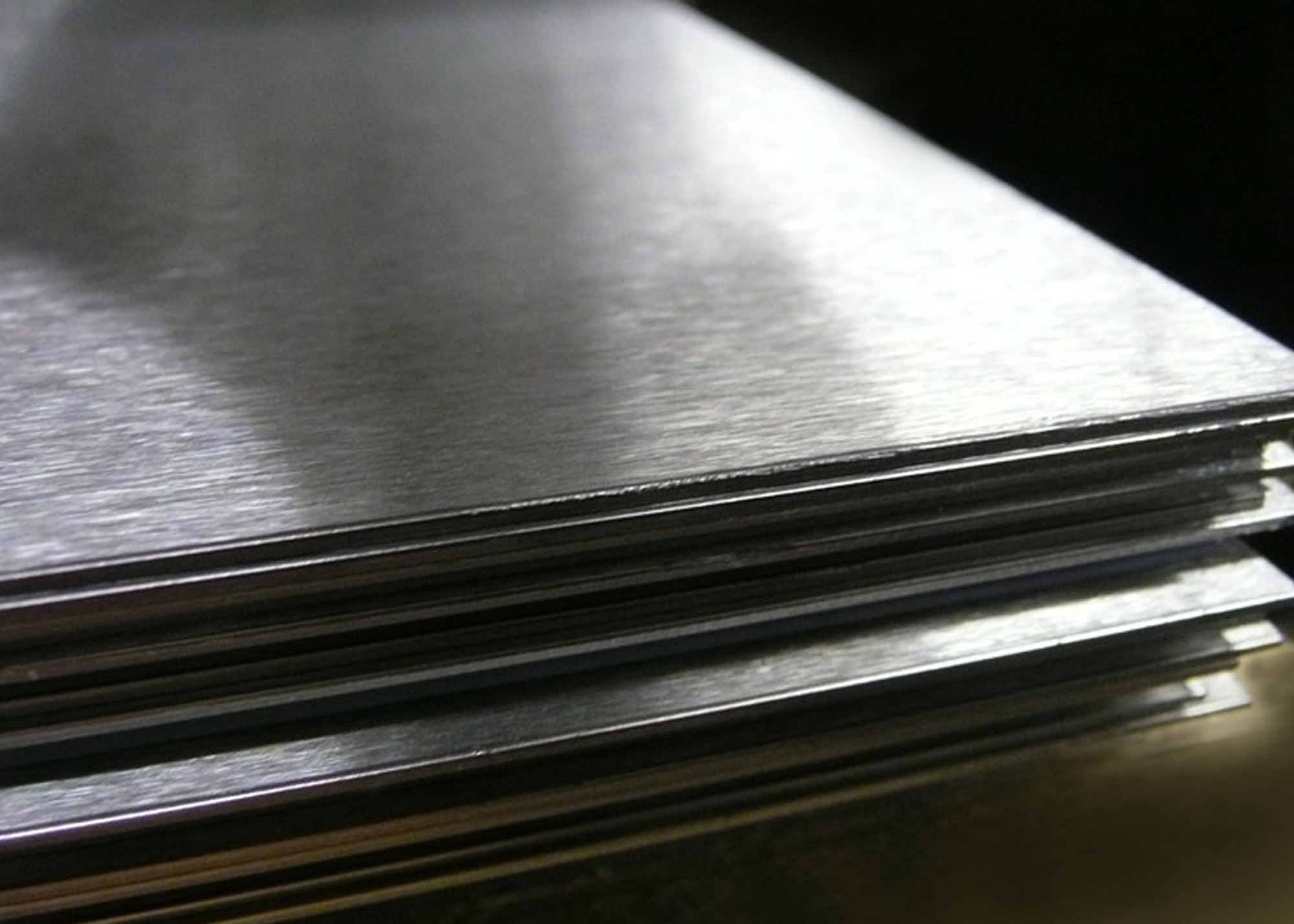
Choosing the wrong stainless steel grade is one of the most common — and costly — material selection errors in industrial procurement. 304 and 316L look interchangeable on a spec sheet but perform completely differently in a chloride environment; a duplex grade rated for 620 MPa can outlast two lighter grades combined in an offshore application. This guide compares the five alloy families by the numbers that actually matter for selection.
Stainless steel grades and series
Stainless steels are grouped into five main families based on their microstructure and alloying content. Each family has distinct mechanical properties, corrosion resistance characteristics, and weldability:
| Family | Typical grades | Key property | Magnetic? | Common application |
| Austenitic (300 series) | 304, 316L, 321, 310 | Excellent corrosion resistance | No | Oil & gas, marine, food, chemical |
| Ferritic (400 series) | 430, 444, 446 | Moderate corrosion resistance | Yes | Automotive, appliances, architecture |
| Martensitic (400 series) | 410, 420, 440C | High hardness, moderate corrosion | Yes | Cutlery, valves, pump shafts |
| Duplex | 2205 (S32205) | High strength + pitting resistance | Partially | Pressure vessels, desalination, offshore |
| Super duplex | S32750, S32760 | PREN ≥40, extreme resistance | Partially | Subsea, aggressive chloride service |
| Precipitation hardening | 17-4PH, 15-5PH | Very high strength + good corrosion | Varies | Aerospace, defence, high-pressure fittings |
Key properties of stainless steel
The properties of stainless steel that make it the preferred material for demanding industrial applications include:
- Corrosion resistance: the passive chromium oxide layer provides protection in atmospheric, aqueous, and chemical environments. Higher chromium, molybdenum, and nitrogen content increases resistance to pitting and crevice corrosion.
- Mechanical strength: austenitic grades typically have tensile strengths of 515–620 MPa. Duplex grades reach 620–760 MPa, roughly double that of standard 304. Precipitation-hardened grades such as 17-4PH can exceed 1,000 MPa.
- Cryogenic toughness: austenitic grades retain toughness at temperatures down to −196°C, making them suitable for LNG and cryogenic applications.
- High-temperature performance: 310 and 321 grades perform to 1,100°C and 900°C respectively. Stabilised grades resist sensitisation and intergranular corrosion after welding.
- Weldability: most austenitic and duplex grades weld well with standard techniques. Low-carbon variants (316L, 304L) are preferred for welded assemblies to minimise carbide precipitation.
- Hygiene: the smooth, non-porous surface is easy to clean and resists bacterial build-up, making austenitic stainless steel the standard material for pharmaceutical and food processing equipment.
Stainless steel grade comparison: 304 vs 316L vs 321 vs 2205
| Property | 304 | 316L | 321 | 2205 Duplex |
| Chromium content | 18% | 16–18% | 17–19% | 22% |
| Nickel content | 8–10% | 10–14% | 9–12% | 4.5–6% |
| Molybdenum | None | 2–3% | None | 3% |
| Tensile strength | 515 MPa min | 485 MPa min | 515 MPa min | 620 MPa min |
| Pitting resistance (PREN) | ~18 | ~24 | ~18 | ~34 |
| Max service temp | 870°C | 870°C | 900°C | 300°C (duplex) |
| Weldability | Excellent | Excellent | Good | Good with care |
Conclusion
Stainless steel is a high-performance material whose properties of corrosion resistance, strength, and durability make it fundamental to modern industry. From the austenitic grades used in food processing to the robust duplex steels specified for oil pipelines, each type offers a unique solution for specific engineering challenges.
To ensure the success and longevity of your projects, partnering with an expert supplier is essential. As premier stainless steel suppliers in Sharjah and across the UAE, we are committed to providing certified, high-quality materials that meet your exact specifications. Learn more about our capabilities on our About Stainless Steel Products page, or explore the full UAE Stainless Steel Stock Range for available grades and forms. For project-specific guidance or quotation requests, Contact Us for Stainless Steel Supplies. You can also read about our proven track record across diverse sectors by visiting Industries We Serve. For reliable supply and technical support, contact our stainless steel experts in the UAE.
FAQ section
Q: What is stainless steel made of?
A: Stainless steel is an iron alloy containing a minimum of 10.5% chromium. Most grades also include nickel, manganese, silicon, and small amounts of carbon. Higher-performing grades add molybdenum for pitting resistance, nitrogen for strength, and titanium or niobium for stabilisation at elevated temperatures.
Q: Which stainless steel grade is best for marine use?
A: 316L is the standard grade for marine applications due to its 2–3% molybdenum content, which significantly improves resistance to pitting and crevice corrosion in chloride environments. For seawater immersion or offshore service, duplex 2205 or super duplex S32760 is recommended.
Q: Is stainless steel magnetic?
A: Austenitic stainless steels (304, 316L, 321) are generally non-magnetic in the annealed condition. Ferritic and martensitic grades (430, 410, 420) are magnetic. Duplex grades are partially magnetic. Cold working can induce some magnetism in austenitic grades. A magnet test alone is not sufficient to identify a grade.
Q: What is the difference between 304 and 316 stainless steel?
A: 316 stainless steel contains 2–3% molybdenum, which 304 does not. This gives 316 significantly better resistance to pitting and crevice corrosion, particularly in chloride-rich environments such as marine, offshore, and chemical processing service. 316L is the low-carbon variant used for welded assemblies.
 Let's Talk
A complete nickel alloy bar order states the UNS number, the ASTM or ASME product standard and grade...
Alloy 825 is a nickel-iron-chromium alloy with 2.5–3.5% molybdenum plus copper, suited to sulfuric a...
Carbon equivalent (Ceq) is calculated using the IIW formula — CEV = C + Mn/6 + (Cr+Mo+V)/5 + (Ni+Cu)...
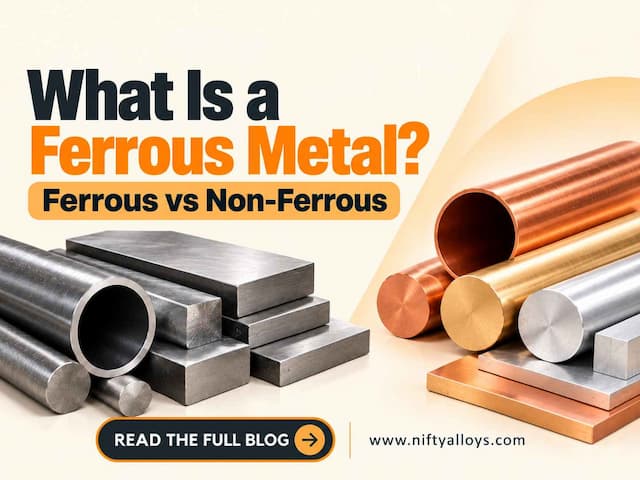
metal magnetism What Is a Ferrous Metal? Ferrous vs Non-Ferrous Explained Quick Answer ...




Elevate Your Projects with
with
 Our Superior Steels
