

What Metal Does Not Rust? Corrosion-Resistant Metals
No metal is entirely immune to all forms of corrosion, but several genuinely resist rust (iron oxide corrosion) under normal conditions: stainless steel, titanium, aluminum, naval bronze, and other copper alloys. Each achieves this differently — stainless steel and titanium form a thin, self-healing protective oxide layer, aluminum forms a similar protective oxide, and copper alloys resist rust because they contain no iron at all. "Rust" technically only applies to iron and its alloys, which is why non-ferrous metals like aluminum, copper, and titanium don't rust by definition, though they can still corrode in other ways.
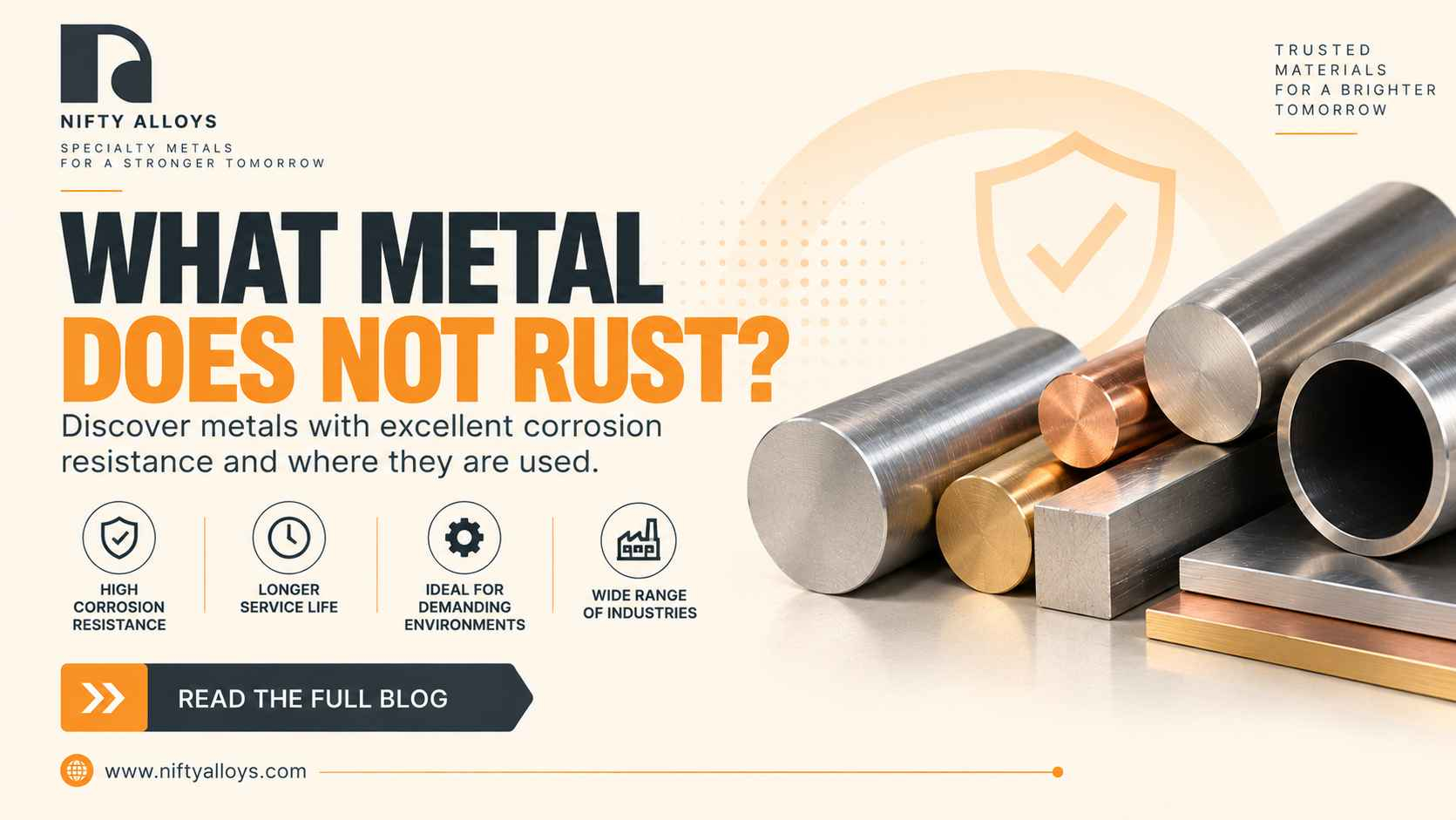
"Rust" specifically refers to iron oxide the reddish corrosion product that forms when iron reacts with oxygen and moisture. That means the honest answer to "what metal does not rust" splits into two categories: metals that contain no iron at all (so rust is chemically impossible), and iron-based alloys engineered to resist rusting through a protective barrier. Both are useful to understand, especially when "rust-proof" is being used loosely to mean "corrosion-resistant" in general.
Stainless Steel
Stainless steel is iron-based (so it technically can rust if the protective layer is damaged and not allowed to re-form), but it resists rusting under normal conditions because of a minimum 10.5% chromium content, which forms a thin, self-healing chromium oxide layer on the surface. Different grades offer different levels of resistance 304 and 316 handle most environments well, while duplex and super duplex grades are specified for more aggressive chloride environments such as marine and offshore applications.
Titanium
Titanium forms an extremely stable, tenacious oxide layer that makes it highly resistant to corrosion in seawater, chlorides, and many acids in some aggressive environments, titanium outperforms even high-grade stainless steel. This is part of why it's specified for marine, aerospace, and chemical processing applications despite its higher cost.
Aluminum
Aluminum reacts with oxygen almost instantly to form a thin, transparent aluminum oxide layer that protects the metal beneath from further oxidation. This happens naturally and continuously, which is why aluminum resists corrosion well in most atmospheric conditions, though it can still corrode in highly alkaline or certain saltwater conditions without additional protection.
Naval Bronze and Copper Alloys
Copper-based alloys including naval brass and aluminum bronze contain no iron, so they cannot rust by definition. They resist general corrosion well, particularly in seawater, which is why they remain a standard choice for marine hardware, propeller shafts, and fittings, though they can be susceptible to specific corrosion mechanisms like dezincification in certain brass compositions.
Comparing Corrosion-Resistant Metals
| Metal | Why It Resists Rust | Typical Use Case |
| Stainless Steel | Self-healing chromium oxide layer | General industrial, food, marine (grade-dependent) |
| Titanium | Extremely stable, tenacious oxide layer | Marine, aerospace, chemical processing |
| Aluminum | Thin protective aluminum oxide layer | Lightweight structures, atmospheric exposure |
| Naval Bronze / Brass | Contains no iron; copper-based | Marine hardware, propeller shafts, fittings |
Note
"Doesn't rust" is not the same as "doesn't corrode." Stainless steel can suffer pitting or crevice corrosion in aggressive chloride environments if the wrong grade is specified; aluminum can corrode in strongly alkaline conditions; even titanium has specific environments where it is not the right choice. Selecting a corrosion-resistant metal means matching the specific corrosion mechanism to the environment, not just picking the most famous "rust-proof" option.
FAQ
Does stainles steel really never rust?
Under normal conditions, no — the chromium oxide layer continuously protects the surface. But if that layer is damaged (through scratching, contamination with carbon steel particles, or exposure to an environment too aggressive for the grade) and not given the chance to re-form, stainless steel can rust or corrode, most often in the form of surface staining, pitting, or crevice corrosion.
Why doesn't copper or bronze rust?
Rust is specifically iron oxide, and copper alloys contain no iron. Copper and its alloys do corrode over time (developing the green patina seen on aged copper roofing, for example), but that process is chemically different from rusting and generally protective rather than destructive.
Is titanium more corrosion-resistant than stainless steel?
In many aggressive environments — particularly seawater and certain acidic conditions — yes. Titanium's oxide layer is exceptionally stable, which is why it's specified over stainless steel in some of the most demanding marine and chemical processing applications, despite its significantly higher cost.
What's the most cost-effective rust-resistant option for general use?
For most general industrial and structural applications, standard austenitic stainless steel grades (304, 316) offer the best balance of corrosion resistance and cost. Titanium, duplex stainless, and naval bronze are reserved for more aggressive environments or applications where their specific additional properties justify the higher cost.
Certified Corrosion-Resistant Alloys
Nifty Alloys LLC supplies certified stainless steel, duplex and super duplex stainless, nickel alloys, titanium, naval bronzes, tool steels, and alloy steels to buyers across the UAE, GCC, and export markets, with full EN 10204 3.1 certification for every heat supplied.
Contact Nifty Alloys for material availability, certified supply, or a formal quotation referencing your project's grade, form, and certification requirements.
 Let's Talk
A complete nickel alloy bar order states the UNS number, the ASTM or ASME product standard and grade...
Alloy 825 is a nickel-iron-chromium alloy with 2.5–3.5% molybdenum plus copper, suited to sulfuric a...
Carbon equivalent (Ceq) is calculated using the IIW formula — CEV = C + Mn/6 + (Cr+Mo+V)/5 + (Ni+Cu)...
metal magnetism What Is a Ferrous Metal? Ferrous vs Non-Ferrous Explained Quick Answer ...




Elevate Your Projects with
with
 Our Superior Steels
