

How to Specify Nickel Alloy Round Bar on a Purchase Order
A complete nickel alloy bar order states the UNS number, the ASTM or ASME product standard and grade, the condition (annealed, solution annealed or aged), the form and surface finish, size, length and quantity, any supplementary requirements such as NACE MR0175, ultrasonic testing or PMI, and the certificate type. Anything left open is chosen by the supplier.

"Inconel 625 round bar, 2 inch, 3 metres." Enquiries like this arrive every week, and every supplier who quotes on them is guessing at the standard, the condition, the finish and the certificate. The result is three quotes that cannot be compared, or bar that arrives correct to the letter of the order but wrong for the job.
This guide walks through what a complete nickel alloy bar order needs to state, line by line, with the standards for the grades buyers in oil and gas, marine and process industries order most.
Why Do Nickel Alloy Bar Orders Go Wrong?
Most problems trace back to four gaps: ordering by trade name instead of UNS number, leaving the heat treatment condition open, quoting an ASTM standard where the project needs ASME certification, and forgetting supplementary requirements such as sour-service compliance. None of these is a supplier error. A supplier is only bound to meet what the order says, and the cheapest compliant option is not always the one your drawing assumed.
Every ASTM nickel alloy product standard contains an "Ordering Information" clause listing exactly what the purchaser must state. It is rarely read, and it is the best checklist available.
Which ASTM Standard Covers Your Alloy?
| Alloy | UNS | Rod and bar | Forgings | Condition to state |
| Alloy 625 | N06625 | ASTM B446 | ASTM B564 | Grade 1 (annealed) or Grade 2 (solution annealed) |
| Alloy 825 | N08825 | ASTM B425 | ASTM B564 | Annealed |
| Alloy 400 (Monel 400) | N04400 | ASTM B164 | ASTM B564 | Annealed, hot-worked or cold-worked |
| Alloy K500 (Monel K500) | N05500 | ASTM B865 | ASTM B865 | Annealed, hot- or cold-worked; aged or unaged |
| Alloy 718 | N07718 | ASTM B637; API 6A718 for oilfield | ASTM B637 | Solution treated, or solution treated and aged |
| Alloy C-276 | N10276 | ASTM B574 | ASTM B564 | Solution annealed |
| Alloy 600 | N06600 | ASTM B166 | ASTM B564 | Annealed, hot-worked or cold-worked |
Where the bar will go into ASME code pressure equipment, specify the ASME version as well, for example "ASTM B446 / ASME SB-446". Dual-certified material is common, but if the order says ASTM only, an ASME stamp is not guaranteed.
Note too that ASTM uses "rod" for round solid sections and "bar" for squares, rectangles and hexagons. Most buyers say "round bar", which is fine in conversation, but the section shape should be explicit on the order.
What Should Each Order Line Include?
- Alloy by UNS number: UNS N06625, not "Inconel 625". Trade names belong to specific producers; the UNS number lets any compliant mill supply.
- Standard, grade and edition: the product standard from the table above, with the grade where one exists. Name the edition year only if the contract requires it.
- Condition: annealed, solution annealed, hot-worked, cold-worked or aged. For Alloy 625 this is the Grade 1 or Grade 2 choice, which changes strength and high-temperature behaviour.
- Form and surface finish: hot-worked (black), peeled or turned, cold-drawn, or centreless ground. Finish affects tolerance, machining allowance and price. Where tight diameter tolerance matters, ground bar removes a machining step.
- Size, length and quantity: diameter in one unit system, length as random, fixed or cut pieces with a cut tolerance, and quantity in pieces as well as kilograms. Our steel weight calculator guide shows how to convert between the two.
- Supplementary requirements: NACE MR0175 / ISO 15156 compliance with hardness reported; ultrasonic testing with the standard and acceptance class; grain size, impact or PMI testing; and melt route where an aerospace or oilfield specification controls it.
- Documentation: EN 10204 3.1 as a minimum, or 3.2 where third-party witnessing is required, with heat-number traceability and marking. See our EN 10204 2.2 vs 3.1 vs 3.2 guide for when each applies.
Example RFQ Line
Item 1: Rod, UNS N06625, ASTM B446 / ASME SB-446 Grade 1 (annealed), cold-finished, 50.8 mm diameter, 6 pieces x 1,000 mm cut length (+5 / -0 mm), NACE MR0175 / ISO 15156 compliant with hardness reported, PMI on each piece, EN 10204 3.1 certificate.
A line written this way can be quoted by any competent supplier, compared like for like, and inspected without argument on arrival.
Which Alloys Need Extra Care on Condition?
Precipitation-hardening alloys are where condition mistakes cost the most. Alloy K500 and Alloy 718 can be bought soft (annealed or solution treated) or fully aged. Soft material machines far more easily and is aged after machining; aged material arrives at full strength but is harder on tooling. Decide which route your workshop will follow before the order goes out, because the same UNS number covers both.
For oil and gas wellhead and downhole parts, Alloy 718 is usually ordered to API 6A718 rather than ASTM B637 alone. API 6A718 adds controls on hardness, microstructure and testing that a general ASTM order does not guarantee. Our Inconel 718 guide covers the alloy in more detail.
Common Mistakes to Avoid
Warning: Five Errors That Cause Rejected Bar
- Ordering in inches and millimetres interchangeably: 50 mm and 2 inch (50.8 mm) are different stock sizes with different availability.
- Ordering ASTM where ASME is required, and discovering it at code inspection.
- Leaving NACE MR0175 off the order for sour-service parts. Without it, the supplier has no obligation to meet sour-service hardness limits.
- Ordering random lengths when the drawing needs cut pieces, then losing yield to offcuts.
- Omitting the certificate type, which leaves a 2.2 declaration of compliance as technically acceptable.
How a Stockist Should Handle Your Order
A good stockist reads your order against the standard before quoting, not after. At Nifty Alloys, we check each line against the applicable ASTM or ASME specification, flag missing or conflicting requirements before we price, supply cut-to-length bar, and have every mill test certificate reviewed by our QA/QC team before dispatch under our quality and certification standards.
Frequently Asked Questions
What is the difference between ASTM B446 and ASME SB-446?
The technical requirements are essentially the same. ASME SB-446 is the version adopted into the ASME Boiler and Pressure Vessel Code, and is required when the bar is used in code-stamped equipment.
Should I order Alloy 625 Grade 1 or Grade 2?
Grade 1 (annealed) is the usual choice for corrosion service and gives higher room-temperature strength. Grade 2 (solution annealed) is specified for high-temperature creep service. Check which your design is based on.
Is rod the same as bar in ASTM nickel alloy standards?
No. In ASTM terminology, rod is a round solid section, while bar covers squares, rectangles and hexagons. State the section shape on the order.
Do I need EN 10204 3.1 or 3.2 certification?
3.1 is the standard minimum for industrial and oil and gas supply. 3.2 is required when a third-party inspector or classification society must witness and countersign the testing.
Send Us Your Nickel Alloy Bar Enquiry
Nifty Alloys LLC is a Dubai-based stockist and supplier of certified nickel alloys, including Alloy 625, 825, Monel 400, Monel K500, Alloy 718 and C-276, to buyers across the UAE, GCC and export markets.
Send your RFQ to our team, even if it is only a grade and a size. We will flag anything missing before quoting, so the bar you receive matches the job it is for.
 Let's Talk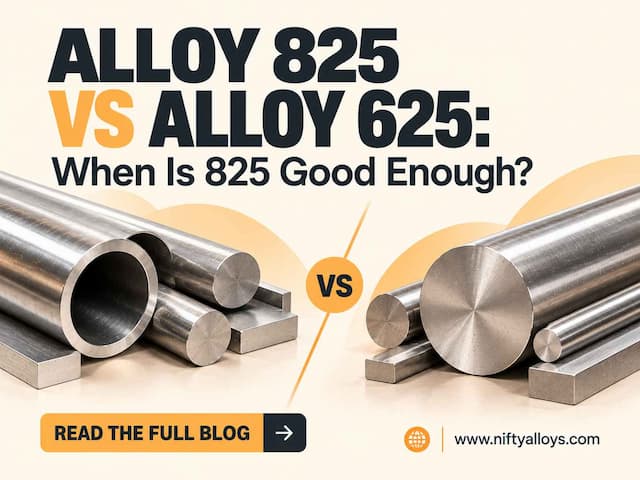
Alloy 825 is a nickel-iron-chromium alloy with 2.5–3.5% molybdenum plus copper, suited to sulfuric a...
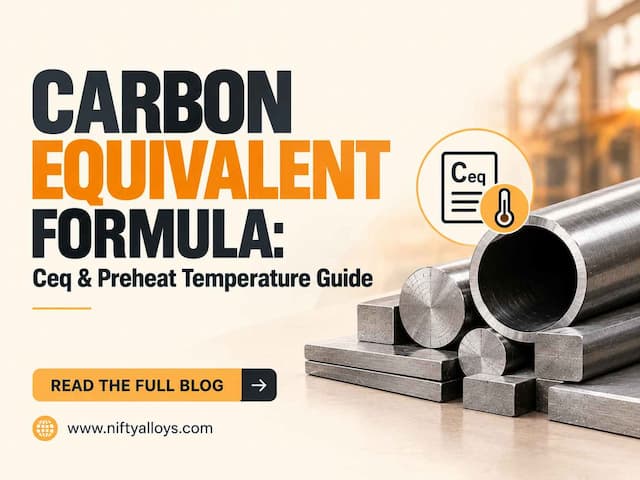
Carbon equivalent (Ceq) is calculated using the IIW formula — CEV = C + Mn/6 + (Cr+Mo+V)/5 + (Ni+Cu)...
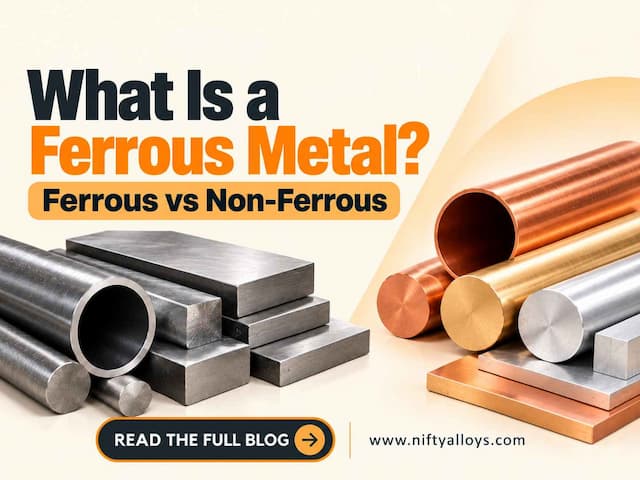
metal magnetism What Is a Ferrous Metal? Ferrous vs Non-Ferrous Explained Quick Answer ...
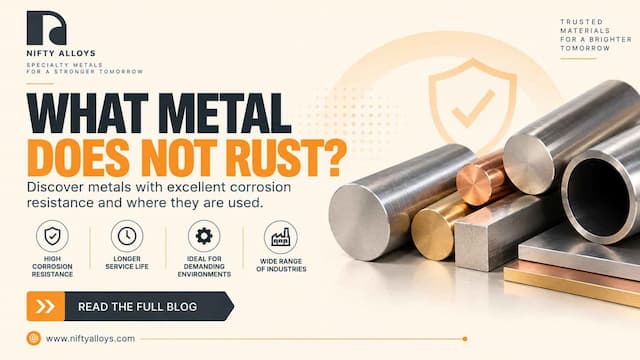
No metal is entirely immune to all forms of corrosion, but several genuinely resist rust (iron oxide...




Elevate Your Projects with
with
 Our Superior Steels
