

Cast Iron vs Ductile Iron: Key Differences & Applications
Cast iron (grey iron) contains graphite in flake form, making it brittle but excellent for machinability and vibration damping. Ductile iron (also called SG iron or nodular iron) is treated with magnesium to form spherical graphite nodules instead, giving it tensile strength and elongation closer to mild steel. Which one to specify depends on whether the part needs to absorb shock or flex under load.
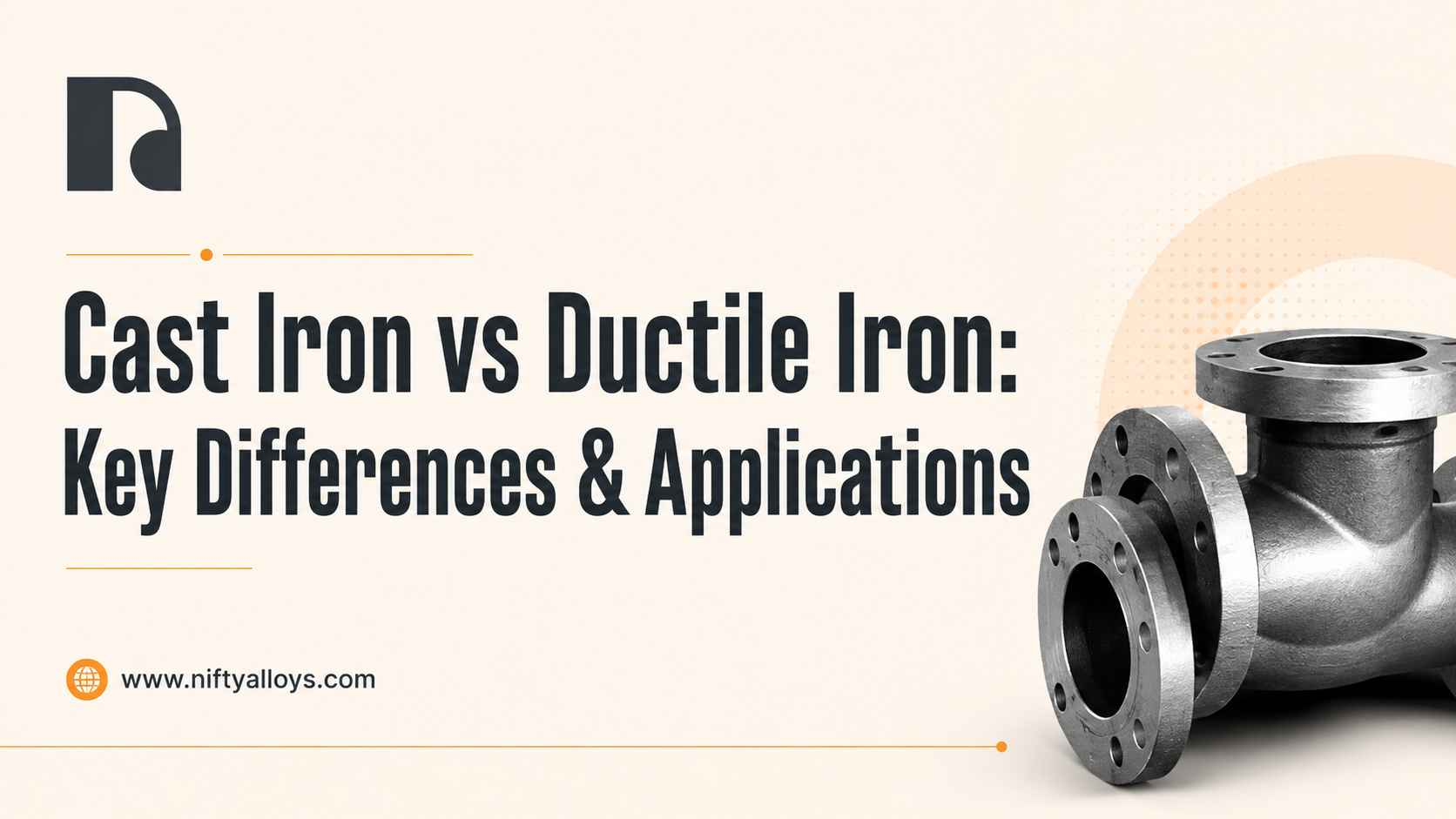
"Cast iron" is often used loosely to mean any iron casting, but grey cast iron and ductile iron behave very differently under load despite sharing a base composition. The difference comes down to the shape of the graphite inside the metal, not the iron or carbon content itself. Getting this wrong at the specification stage is a common and costly mistake — a component designed for ductile iron's flex and impact resistance will fail unexpectedly if quietly substituted with grey iron, and vice versa on cost.
What Actually Makes Ductile Iron "Ductile"?
Both materials start as an iron-carbon-silicon alloy. In grey cast iron, carbon precipitates out as graphite flakes during solidification — sharp, interconnected shapes that act as built-in stress concentration points, making the material brittle under tension even though it machines beautifully and damps vibration well. Ductile iron is produced by adding a small amount of magnesium (occasionally cerium) to the molten iron just before casting. This nodulizing treatment causes the graphite to precipitate as spheroids instead of flakes — rounded shapes with no sharp edges to concentrate stress, which is what gives ductile iron its steel-like tensile strength and elongation. This is the same spheroidal graphite structure covered in more depth on our S-G Iron Grades 300–700 page.
How the Manufacturing Process Creates the Difference
The graphite shape is engineered into the material at the point of pouring, not left to chance. Grey cast iron uses no nodulizing treatment — as the melt cools, carbon precipitates along the path of least resistance, forming interconnected flakes. This is a forgiving process, tolerant of variation in cooling rate and section thickness, which keeps grey iron castings comparatively inexpensive. Ductile iron adds a critical extra step: magnesium is introduced into the ladle just before pouring, in a reaction that must be timed precisely since magnesium is highly reactive and boils well below iron's pouring temperature. Get the treatment window wrong, or let the melt sit too long before pouring, and the nodules degrade back toward a flake-like structure — the exact failure mode our QA/QC team screens for on incoming material, discussed below. This added process control is the main reason ductile iron carries a cost premium over grey iron for an equivalent casting.
Cast Iron vs Ductile Iron — Property Comparison Chart
| Property | Grey Cast Iron | Ductile Iron |
| Graphite form | Flakes | Spherical nodules |
| Tensile strength | ~150–350 MPa | ~400–700 MPa |
| Yield strength | Not well defined (brittle) | ~250–460 MPa depending on grade |
| Elongation | Near zero (brittle) | 2–22% depending on grade |
| Impact resistance | Poor | Good to excellent |
| Fatigue resistance | Moderate | Good |
| Vibration damping | Excellent | Moderate |
| Machinability | Excellent | Good |
| Weldability | Poor, requires preheat | Fair, with correct procedure |
| Thermal expansion (20°C) | ~11 x10⁻⁶ /°C | ~11–12 x10⁻⁶ /°C — similar |
| Corrosion resistance | Comparable, slightly lower | Comparable, slightly higher |
| Relative cost | Lower | Moderate |
Grey and ductile iron are the two families behind almost every real specification decision, but they sit within a broader cast iron family that also includes white iron (very hard and abrasion-resistant but extremely brittle, used in crusher liners and other high-wear parts) and malleable iron (a heat-treated white iron, largely superseded by ductile iron except in small, thin castings). This guide focuses on the grey-versus-ductile decision because that is where the overwhelming majority of buyers are actually choosing.
Standards and Grade Designations
Grey cast iron is most commonly specified to BS1452 or ASTM A48, with grades designated by minimum tensile strength — for example, our BS1452 Grade 350 Cast Iron denotes a minimum 350 MPa tensile strength, the highest grade in that standard. Ductile iron follows a different naming logic under BS2789 and the equivalent EN-GJS designation: the first number is minimum tensile strength in MPa, and the second is minimum percentage elongation. A grade like 400-15 prioritizes ductility (15% elongation) over peak strength, while 500-7 trades some elongation for higher strength (7% minimum elongation at 500 MPa). ASTM A536 covers the same material under a slightly different grade numbering system, and purchase orders referencing international projects sometimes need both standards cross-checked to confirm equivalence before an order is placed.
The strength and elongation figures for ductile iron vary considerably by grade — from the highly ductile 400-15 grade through to the higher-strength, lower-elongation 500-7 grade. Grade selection within the ductile iron family is its own decision, covered in our BS2789 Grade 500-7 SG Iron guide, with the higher-elongation BS2789 Grade 420-12 SG Iron available where toughness matters more than peak strength.
Which One Should You Specify — By Application
Pressure-Retaining Components: Pipes, Valves, Fittings
Ductile iron dominates modern pressure pipe and valve body applications specifically because grey cast iron's brittleness under tension makes it a poor choice wherever internal pressure or impact loading is involved. Water and gas distribution networks worldwide have largely shifted to ductile iron pipe for this reason — the material can flex and absorb a shock load (a nearby excavation strike, ground movement) without the sudden fracture failure grey iron would show under the same event.
Machine Bases, Housings, and Vibration-Sensitive Components
Grey cast iron remains the preferred choice for machine tool bases, engine blocks, and pump housings, where its superior vibration damping and excellent machinability outweigh the lack of ductility. These components see compressive loads and vibration far more than tension, which is exactly where grey iron's flake graphite structure performs well rather than working against it. Our Cast Iron Bars range covers both grey and ductile options for this kind of general engineering use, and our BS1452 Grade 350 Cast Iron page details the highest-strength grey iron grade for demanding housing applications.
Structural and High-Stress Dynamic Components
Crankshafts, gears, and hubs subject to repeated dynamic loading need ductile iron's fatigue resistance and impact toughness — grey iron's brittleness makes it unsuitable wherever cyclic stress or shock loading is a realistic service condition, regardless of how attractive its machinability and unit cost look on paper.
Cost and Sourcing Considerations
Grey cast iron stays the lower-cost option for a given casting size, thanks to simpler process control and higher tolerance for variation during pouring. Ductile iron's premium narrows at scale, since the nodulizing treatment cost is largely fixed per batch, and its higher strength-to-weight ratio can allow thinner wall sections that partly offset the material cost. Against a steel casting or fabrication alternative, ductile iron is often the more cost-effective route once casting complexity and machining time are factored in.
A Note From Our QA/QC Review
Elongation is the property we scrutinize most closely on incoming ductile iron MTCs, since it is the figure that separates a genuine ductile iron casting from a mislabelled or improperly treated one — a casting can show acceptable tensile strength while still failing the elongation minimum for its stated grade if the nodulizing treatment was inconsistent. We verify elongation against the specific BS2789 or ASTM A536 grade designation on every batch before certification sign-off, rather than accepting tensile strength alone as proof of grade compliance.
FAQ
Is ductile iron the same as SG iron?
Yes. Ductile iron, SG (spheroidal graphite) iron, and nodular iron are all names for the same material — the terminology varies by region and standard (BS2789, ASTM A536, EN-GJS), but they describe the same magnesium-treated, nodular-graphite cast iron.
Can ductile iron replace steel in structural applications?
In many cases yes — ductile iron's tensile strength and ductility approach lower-carbon steel grades at a lower cost and with better castability for complex shapes, which is why it has replaced steel in many pipe, valve, and automotive component applications. It does not match steel's toughness at the very high-strength end, so extreme structural or safety-critical applications still warrant a case-by-case comparison.
Why does grey cast iron still get specified if ductile iron is stronger?
Strength is not the only criterion. Grey cast iron's superior vibration damping and machinability, along with its lower cost, make it the better choice for machine bases, housings, and other components where tension and impact are not the dominant load case.
Can you tell grey cast iron and ductile iron apart just by looking at them?
Not reliably by external appearance alone — both have a similar grey-black cast surface. The difference is only confirmed metallurgically, either by a fracture test (ductile iron bends and shows a brighter, more fibrous fracture; grey iron snaps cleanly) or, for certification purposes, by mechanical testing against the specific grade's mill test certificate.
Is ductile iron heavier than grey cast iron?
The two materials have very similar densities (both around 7.1–7.3 g/cm³), so weight is not a meaningful factor in the choice between them. The decision should be driven by the mechanical property requirements — strength, ductility, and impact resistance — rather than weight.
Nifty Alloys LLC supplies certified grey cast iron and ductile (SG) iron across the full grade range, in bars, plates, and castings, to buyers across the UAE, GCC, and global markets. Contact our team to confirm grade, elongation specification, and mill certification (EN 10204 3.1) for your application.
 Let's Talk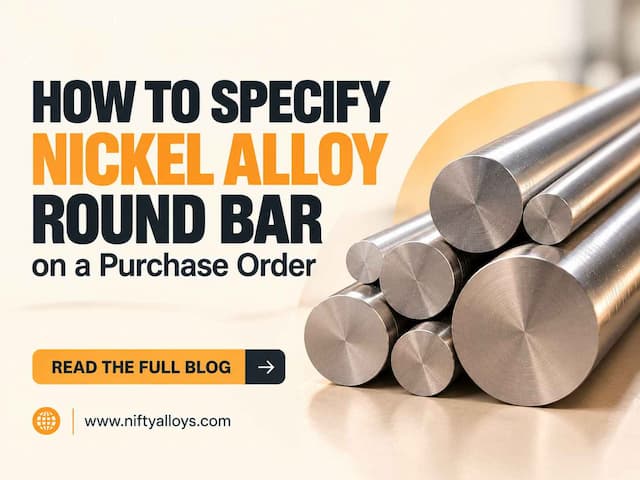
A complete nickel alloy bar order states the UNS number, the ASTM or ASME product standard and grade...
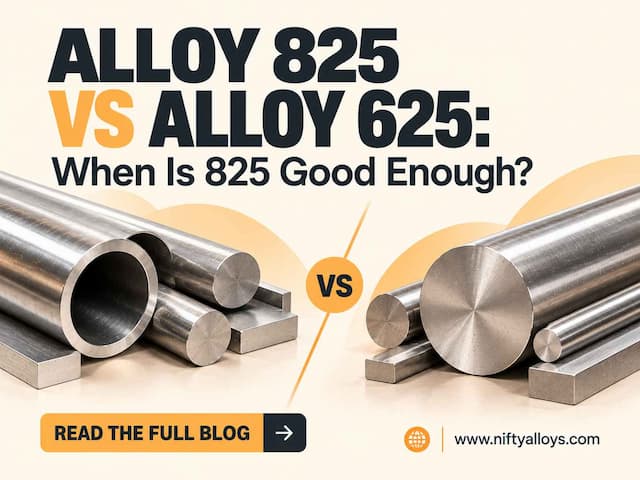
Alloy 825 is a nickel-iron-chromium alloy with 2.5–3.5% molybdenum plus copper, suited to sulfuric a...
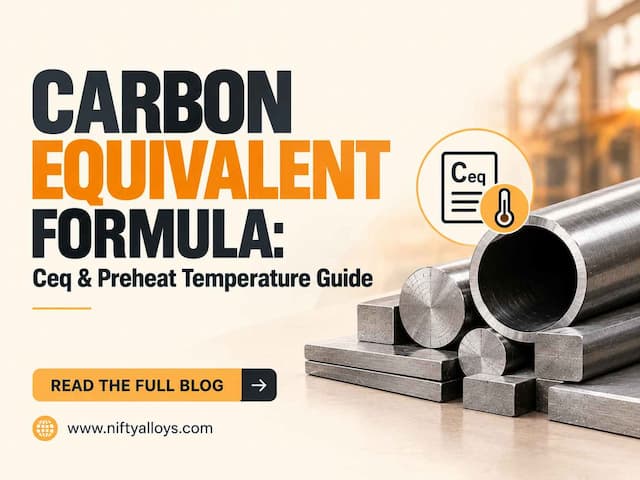
Carbon equivalent (Ceq) is calculated using the IIW formula — CEV = C + Mn/6 + (Cr+Mo+V)/5 + (Ni+Cu)...
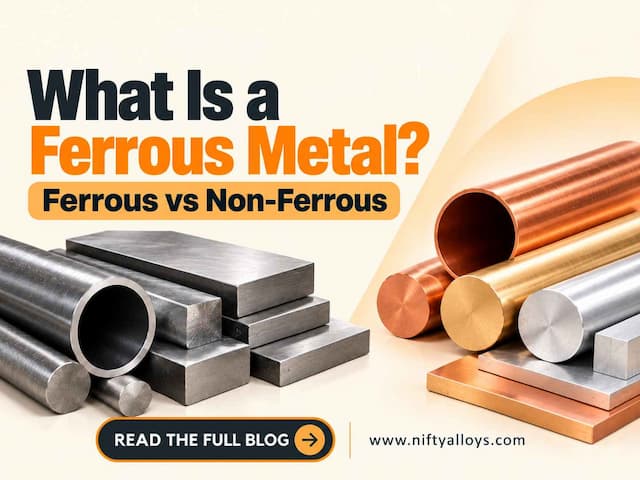
metal magnetism What Is a Ferrous Metal? Ferrous vs Non-Ferrous Explained Quick Answer ...




Elevate Your Projects with
with
 Our Superior Steels
