

Galvanized Steel vs Stainless Steel: Corrosion, Cost & Applications
Galvanized steel resists corrosion through a sacrificial zinc coating applied over carbon steel, while stainless steel resists corrosion through chromium alloyed into the material itself, forming a self-healing passive layer. Galvanized steel costs roughly 2-5 times less upfront but the coating wears over time; stainless steel costs more initially but requires little maintenance and holds its corrosion resistance for the life of the part.
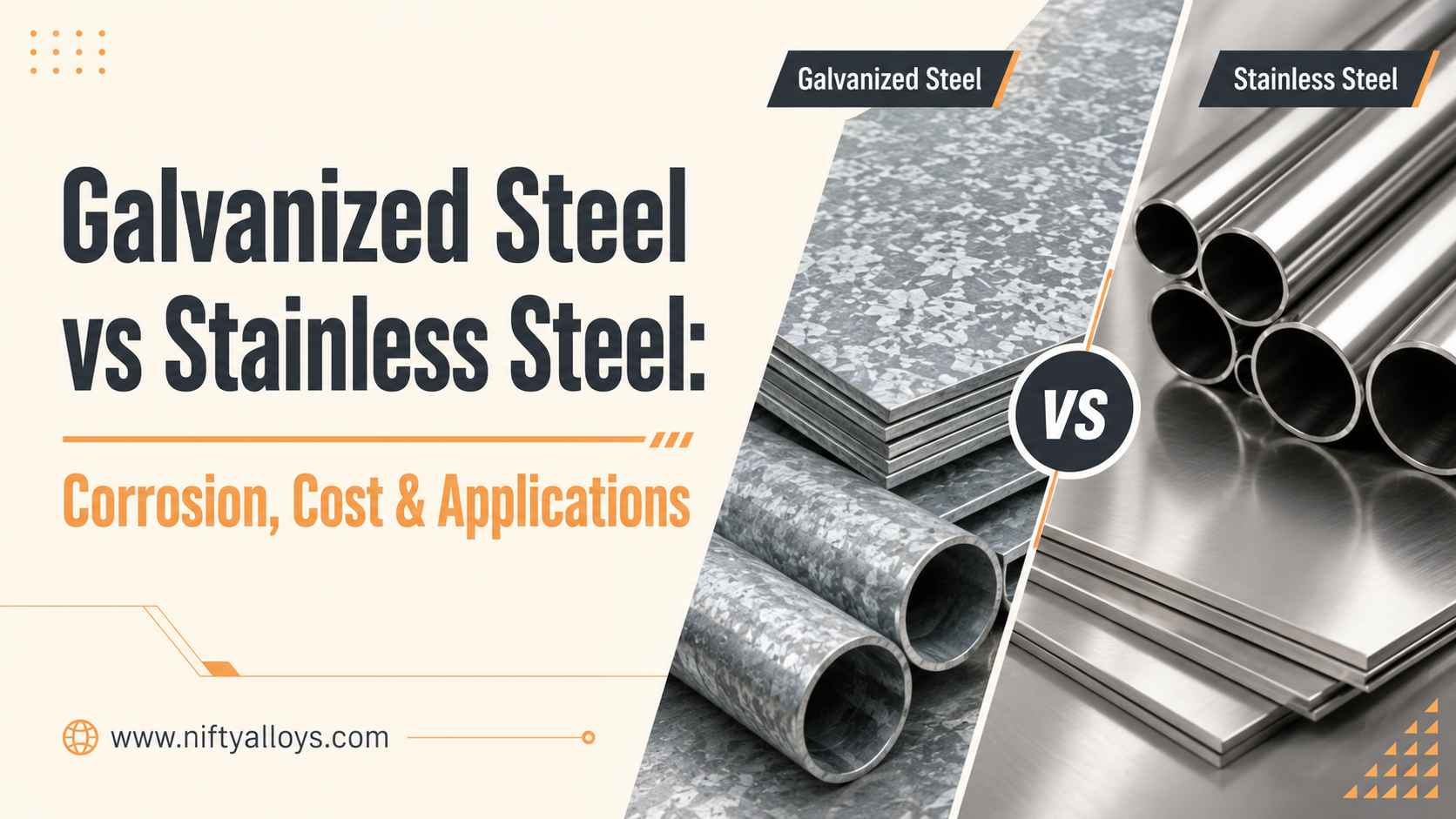
Galvanized steel and stainless steel are both specified to resist corrosion, but they achieve it through fundamentally different mechanisms, and that difference drives nearly every other decision in the comparison: cost, maintenance, fabrication, and expected service life. Choosing between them without understanding the mechanism is how projects end up with premature coating failure in one case, or unnecessary material cost in the other.
How Each Material Actually Resists Corrosion
Galvanized steel is carbon steel coated with a layer of zinc, most commonly applied by hot-dip galvanizing. The zinc protects two ways: it forms a physical barrier against moisture and oxygen, and it provides sacrificial (cathodic) protection, corroding preferentially to protect the underlying steel even where the coating is scratched or damaged, within limits. Once the zinc layer is fully consumed in a given area, the exposed carbon steel beneath begins to rust at the normal rate. Our broader look at carbon steel versus stainless steel explains why unprotected carbon steel corrodes rapidly without a coating or alloying protection in the first place.
Stainless steel resists corrosion differently: it contains a minimum of 10.5% chromium alloyed directly into the material, which reacts with oxygen to form a thin, stable chromium oxide layer across the entire surface. This passive layer is self-healing — if scratched or machined, it re-forms spontaneously in the presence of oxygen, restoring corrosion protection without any external intervention. Because the protection is built into the material rather than applied to its surface, stainless steel's corrosion resistance doesn't wear away or need renewal.
Galvanized Steel vs Stainless Steel: Side-by-Side Comparison
| Factor | Galvanized Steel | Stainless Steel |
| Corrosion mechanism | Sacrificial zinc coating (barrier + cathodic protection) | Chromium oxide passive layer (self-healing, alloyed throughout) |
| Relative upfront cost | Low — typically 2-5x cheaper | Higher — 4-5x galvanized steel is common |
| Maintenance | Coating inspection, repair, or re-galvanizing over time | Minimal — routine cleaning only |
| Service life in harsh/coastal conditions | Reduced — zinc consumption accelerates in humid, saline air | Long — chromium layer performs consistently in chloride exposure |
| Welding/cutting impact | Damages zinc coating; requires cold galvanizing repair or re-dipping | No coating to damage; standard fabrication practices apply |
| Typical standards | ASTM A123 (hot-dip galvanized shapes), ASTM A153 (galvanized hardware) | ASTM A240 (plate/sheet), ASTM A276 (bar), ASTM A312 (pipe) |
Neither material is universally "better" — the comparison depends on the corrosion environment, expected service life, and total project budget, not just the invoice price of the raw material.
The Risk Competitors Rarely Mention: Galvanic Corrosion Between the Two
A detail often missed in general comparisons: galvanized steel and stainless steel should not be placed in direct, continuous contact in a wet or humid environment without isolation. Zinc and the chromium-rich surface of stainless steel sit far enough apart on the galvanic series that contact between them, in the presence of an electrolyte such as moisture or saltwater, can accelerate corrosion of the zinc coating at the point of contact — a bimetallic (galvanic) corrosion risk. This matters directly for fabrication: galvanized steel fasteners used to fix stainless steel fixtures, or galvanized structural steel supporting stainless steel equipment, should be isolated with a non-conductive barrier (such as a nylon washer or coating) where continuous wet exposure is expected, particularly in coastal and marine environments common across the UAE and wider Gulf.
Where Each Material Is Typically Specified
Galvanized steel is the default choice for structural steel, fencing, roofing, and general construction in moderate environments where budget is the primary constraint and the expected service life aligns with the coating's realistic lifespan. It performs reliably in dry or mildly corrosive inland conditions.
Stainless steel is specified where hygiene, chemical exposure, chloride resistance, or long unmaintained service life outweigh upfront cost — food processing and pharmaceutical equipment, marine and offshore fixtures, desalination plant components, and architectural applications exposed to coastal humidity. For projects in coastal UAE and other high-chloride Gulf environments specifically, our guide to
what stainless steel is and how its grades differ explains which stainless families (304, 316, duplex) suit which exposure levels, a useful next step once corrosion resistance rather than cost is the deciding factor.
A Practical Decision Framework
- Dry, inland, low-corrosion environment with budget constraints → galvanized steel is usually sufficient
- Coastal, marine, or high-humidity environment with long expected service life → stainless steel reduces lifecycle cost despite higher upfront price
- Hygiene-critical applications (food, pharma, medical) → stainless steel is generally required regardless of environment
- Structural steel in contact with stainless fixtures in wet conditions → isolate the metals to prevent galvanic corrosion, regardless of which material is chosen for each component
- Budget-constrained large structural projects where periodic maintenance is feasible → galvanized steel remains the practical default
FAQ: Galvanized Steel vs Stainless Steel
Is stainless steel always better than galvanized steel?
No. Stainless steel offers superior, longer-lasting corrosion resistance, but galvanized steel is more cost-effective for dry or moderately corrosive environments where its service life matches project expectations.
Can galvanized steel and stainless steel be used together?
Yes, but direct contact in wet or humid conditions should be avoided or isolated with a non-conductive barrier to prevent galvanic corrosion accelerating zinc loss at the contact point.
How much cheaper is galvanized steel than stainless steel?
Galvanized steel is typically 2 to 5 times cheaper upfront than stainless steel, though the gap narrows when full lifecycle cost, including maintenance and eventual replacement, is factored in.
Does welding damage galvanized steel's corrosion protection?
Yes. Welding or cutting burns off the zinc coating in the affected area, requiring cold galvanizing compound or re-dipping to restore protection. Stainless steel has no coating to damage during standard fabrication.
Which standard applies to galvanized steel versus stainless steel?
Hot-dip galvanized steel is typically specified to ASTM A123 (shapes) or A153 (hardware), while stainless steel is specified to ASTM A240 (plate/sheet), A276 (bar), or A312 (pipe), depending on product form.
Conclusion
Galvanized steel and stainless steel solve corrosion differently — one through a sacrificial coating, the other through alloyed chromium — and that mechanism, more than price alone, should drive material selection. For dry, budget-constrained, moderate environments, galvanized steel remains a sound default. For coastal, chemical, hygiene-critical, or long-service-life applications, stainless steel's lifecycle cost advantage typically outweighs its higher upfront price.
Nifty Alloys LLC supplies certified stainless steel across the UAE, GCC, and export markets, with EN 10204 3.1 Mill Test Certificates and grade guidance for coastal, marine, and process environments. Contact our team to discuss the right material for your project.
 Let's Talk
A complete nickel alloy bar order states the UNS number, the ASTM or ASME product standard and grade...
Alloy 825 is a nickel-iron-chromium alloy with 2.5–3.5% molybdenum plus copper, suited to sulfuric a...
Carbon equivalent (Ceq) is calculated using the IIW formula — CEV = C + Mn/6 + (Cr+Mo+V)/5 + (Ni+Cu)...
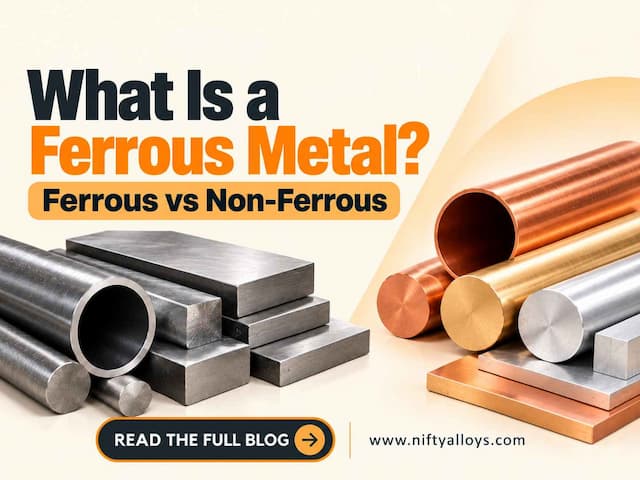
metal magnetism What Is a Ferrous Metal? Ferrous vs Non-Ferrous Explained Quick Answer ...




Elevate Your Projects with
with
 Our Superior Steels
