

Seamless vs Welded Pipe: Which Is Better for Industrial Applications?
Whether seamless or welded pipe is the better choice depends on pressure class, temperature, and service environment. Seamless pipe is generally preferred for high-pressure, high-temperature, and sour-service applications, while welded pipe (ERW, LSAW, or SSAW) is the more practical and cost-effective choice for large-diameter, structural, and low-to-medium pressure systems.
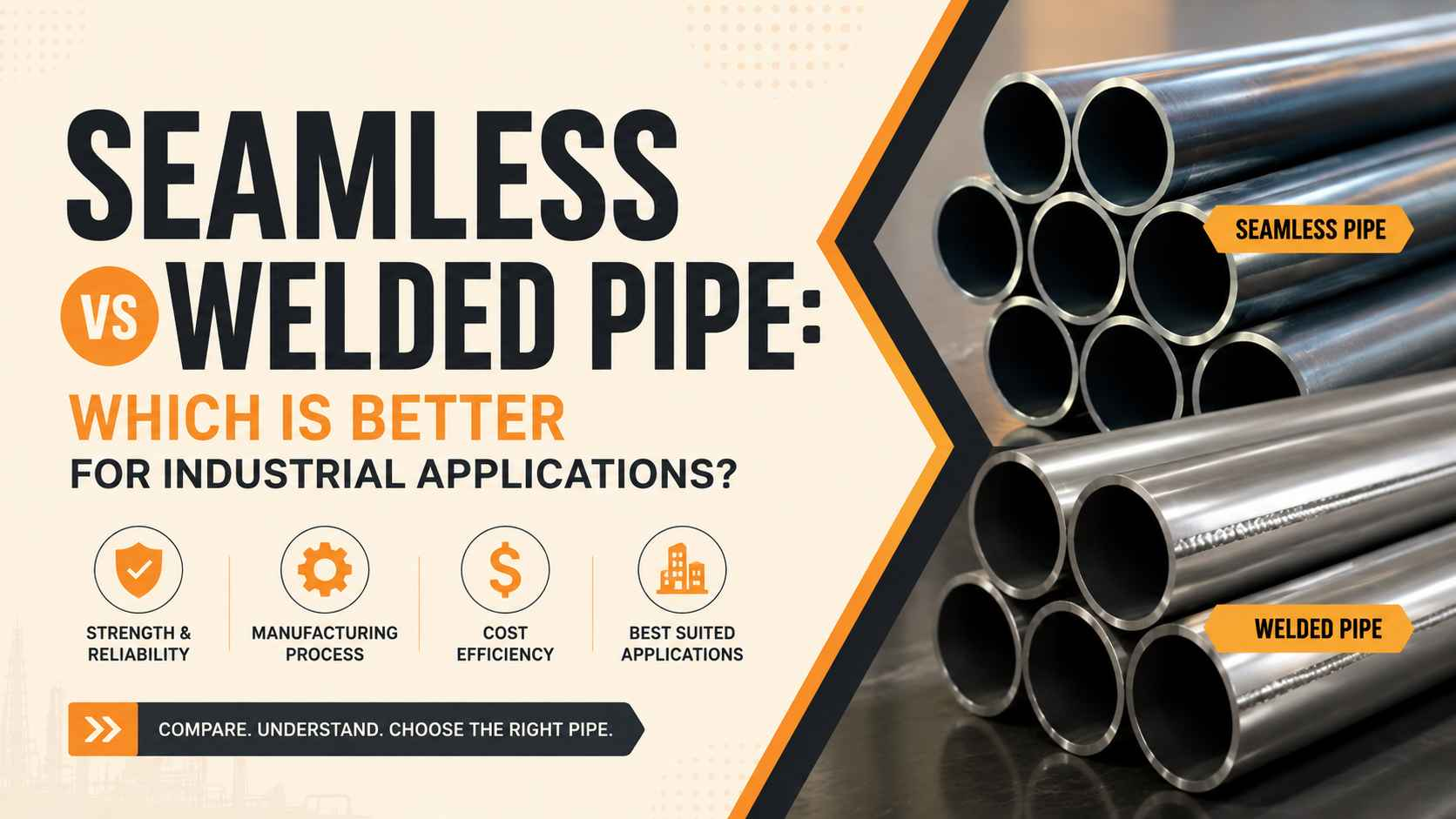
Seamless and welded pipe are the two fundamental categories of steel pipe used across oil and gas, petrochemical, marine, and heavy engineering projects. The right choice affects pressure performance, service life, and total procurement cost — so understanding how each type is made, and where each one is specified, is essential before placing a purchase order.
What Is the Difference Between Seamless and Welded Pipe?
Seamless pipe is manufactured from a solid round steel billet that is heated and pierced through its center, then rolled and stretched to the required outside diameter, wall thickness, and length. There is no seam or joint anywhere along the pipe body.
Welded pipe is manufactured from flat steel plate or coil that is rolled into a cylindrical shape and welded along the seam — either longitudinally or helically. The weld seam becomes an integral part of the finished pipe wall and is tested to confirm it meets the strength of the parent material.
How Are Welded Pipes Made? ERW, LSAW, and SSAW Explained
Welded pipe is not a single product — the welding method used determines diameter range, wall thickness capability, and typical application:
| Type | Process | Typical Diameter Range | Common Standard |
| ERW (Electric Resistance Welded) | High-frequency current fuses cold-formed strip edges | Up to approx. 24″ | ASTM A53, API 5L |
| LSAW (Longitudinal Submerged Arc Welded) | Steel plate formed and welded along a straight seam | 16″ – 100″+ | API 5L, ASTM A672 |
| SSAW / Spiral Welded | Steel coil formed and welded in a helical seam | 16″ – 120″ | API 5L, structural/water pipe |
Seamless vs Welded Pipe: Pressure Rating, Strength, and Reliability
Because seamless pipe has no longitudinal weld, it avoids the stress concentration and localized hardness variation that can occur in and around a weld seam. For a given outside diameter and wall thickness, seamless pipe generally tolerates higher ring (hoop) stress, which is why it remains the default specification for high-pressure and high-temperature service.
Modern welded pipe, however, is far from the weaker option it was once assumed to be. ERW and LSAW pipe produced to current API and ASTM standards undergo hydrostatic testing and, for critical service, non-destructive testing (ultrasonic or radiographic) of the weld seam. When manufactured and tested correctly, welded pipe performs reliably within its rated pressure class — the key is confirming the mill test certificate shows the required NDT and hydrostatic results for your specification.
Which Standards Apply to Seamless vs Welded Pipe?
Material standards specify seamless (SMLS) and welded forms separately, and not every standard covers both. The table below summarizes the standards most commonly specified for industrial and oil & gas procurement:
| Material / Service | Seamless Standard | Welded Standard | Typical Application |
| Carbon steel process pipe | ASTM A106 | ASTM A53 | Process piping, utilities |
| Line pipe (oil & gas) | API 5L (SMLS) | API 5L (ERW / LSAW / SSAW) | Onshore & offshore pipelines |
| Stainless steel pipe | ASTM A312 (“S” grades) | ASTM A312 (“W” grades) | Corrosive & hygienic service |
| Low-temperature carbon steel | ASTM A333 Gr. 6 | ASTM A333 (welded, less common) | Cryogenic, LNG service |
Stainless steel pipe is available in both seamless and welded forms across the common austenitic grades — for a closer look at grade selection within stainless pipe and tube, see our 304 vs 316 stainless steel guide.
When Should You Choose Seamless Pipe?
- High-pressure service — Class 900 and above, or where wall thickness margins are tight
- Sour service (H₂S-containing environments) governed by NACE MR0175 / ISO 15156
- High-temperature service such as boiler and steam lines
- Small-to-medium diameters, typically up to around 24″, where seamless manufacturing is most economical
Sour service selection carries additional hardness and chemistry restrictions regardless of pipe form — our NACE MR0175 / ISO 15156 material selection guide covers the hardness limits and testing requirements in detail.
When Is Welded Pipe the Right Choice?
- Large diameters — LSAW and SSAW readily cover 16″ up to 100″+ where seamless production is impractical
- Cost-sensitive projects and structural or low-to-medium pressure systems
- Water, general transportation, and structural piling applications
- Projects with tighter lead times, where welded pipe is typically more readily available in volume
Pipe class and pressure rating also govern the flanges and fittings used downstream — see our ASME B16.5 flange pressure-temperature rating chart for matching flange class to your piping system.
Certification and Quality Control for Both Pipe Types
Whichever pipe type is specified, the mill test certificate is what confirms it actually meets the order requirement. Our QA/QC lead, Anup Kurup, reviews incoming MTCs against EN 10204 3.1 for chemistry, mechanical properties, and heat treatment condition on seamless pipe, and additionally verifies hydrostatic test results and NDT reports (ultrasonic or radiographic weld inspection) against the applicable standard on welded pipe before material is released for dispatch.
See our API 5L line pipe supply page for available grades, PSL levels, and pipe form (seamless, ERW, LSAW) currently stocked in Dubai for UAE, GCC, and global export.
FAQ
Is seamless pipe stronger than welded pipe?
Seamless pipe generally offers higher and more predictable ring-stress capacity for a given wall thickness, since there is no weld seam. Properly manufactured and tested welded pipe, however, performs reliably within its rated pressure class.
Can welded pipe be used for high-pressure service?
In some cases, yes — subject to the applicable standard, wall thickness, and required NDT. For the most demanding pressure, temperature, or sour-service conditions, seamless pipe remains the default specification.
What is the difference between ERW and LSAW pipe?
ERW pipe is made from cold-formed strip fused with high-frequency current, typically up to about 24″ diameter. LSAW pipe is made from formed steel plate welded along a straight seam, and covers larger diameters up to 100″ or more.
Does NACE MR0175 require seamless pipe?
NACE MR0175 / ISO 15156 does not mandate seamless pipe specifically — it sets hardness and chemistry limits that apply to base metal, weld metal, and heat-affected zone alike. Both seamless and properly qualified welded pipe can meet sour-service requirements when correctly specified and tested.
Which is cheaper, seamless or welded pipe?
Welded pipe is generally less expensive to produce, particularly in larger diameters, making it the more economical choice for non-critical or large-diameter applications where seamless pipe is not required.
Need Certified Seamless or Welded Pipe for Your Project?
Nifty Alloys LLC supplies certified seamless and welded pipe across carbon steel, stainless steel, and API 5L line pipe grades, with EN 10204 3.1 mill test certificates, to UAE, GCC, and global oil & gas, marine, and petrochemical projects. Contact us for material availability, certified supply, sourcing support, or a quotation.
 Let's Talk
A complete nickel alloy bar order states the UNS number, the ASTM or ASME product standard and grade...
Alloy 825 is a nickel-iron-chromium alloy with 2.5–3.5% molybdenum plus copper, suited to sulfuric a...
Carbon equivalent (Ceq) is calculated using the IIW formula — CEV = C + Mn/6 + (Cr+Mo+V)/5 + (Ni+Cu)...
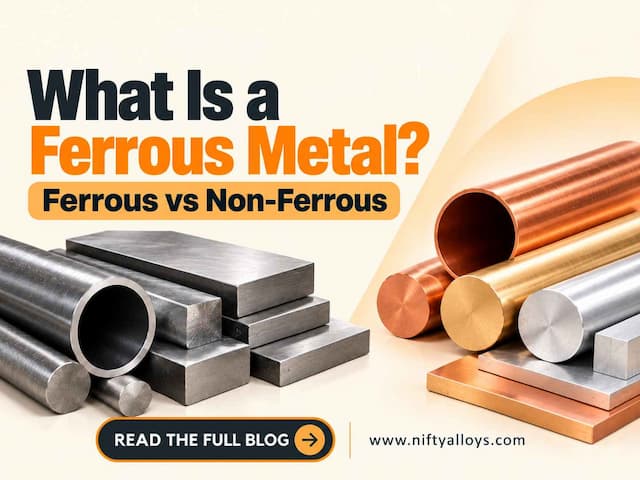
metal magnetism What Is a Ferrous Metal? Ferrous vs Non-Ferrous Explained Quick Answer ...




Elevate Your Projects with
with
 Our Superior Steels
