

Why Does Stainless Steel Rust? Causes & Prevention
Genuine stainless steel does not rust under normal conditions because of its chromium oxide passive layer. When rust appears, it is almost always one of three causes: free-iron surface contamination from carbon steel contact, chloride-induced pitting in aggressive environments, or heat-affected zone sensitization from welding. Which one it is changes whether the material is defective or simply needs cleaning.
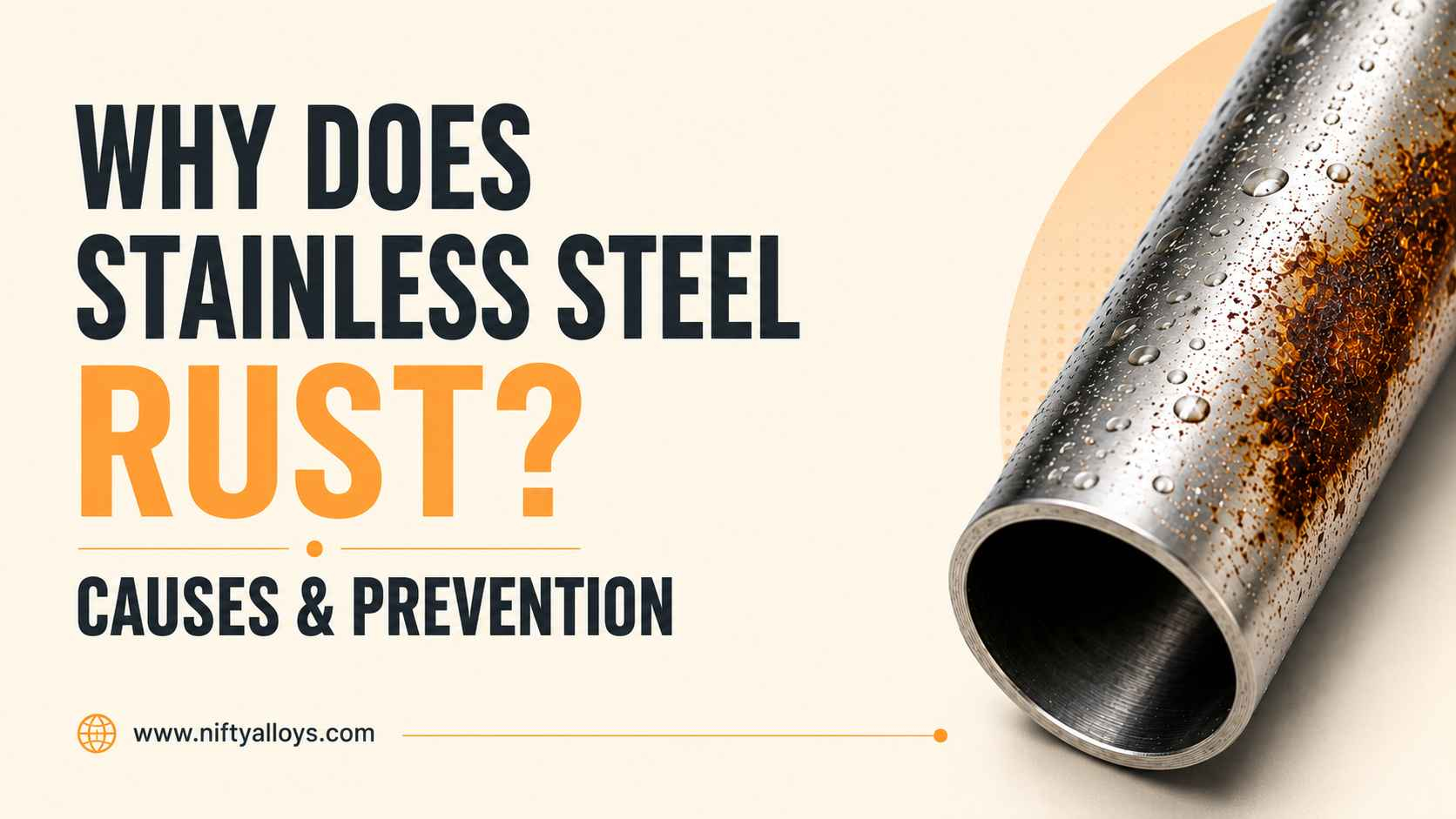
A delivery of "stainless steel" arriving with visible rust spots raises an immediate and reasonable question: is the material actually stainless, or is something wrong with it? In the overwhelming majority of cases, the steel itself is not the problem — the passive chromium oxide layer that makes stainless steel corrosion-resistant is still intact underneath. The rust is either sitting on the surface from an external source, or it has broken through the passive layer at a specific weak point rather than failing generally. Telling these apart matters, because one is a five-minute cleaning fix and the other is a genuine material or fabrication issue.
Cause 1: Free-Iron Surface Contamination
The most common cause of "rust" on stainless steel is not corrosion of the stainless steel at all — it is ordinary carbon steel particles embedded on the surface, rusting normally. This happens when stainless steel is cut, ground, or handled with tools, wire brushes, or racking previously used on carbon steel, or when it sits near carbon steel during storage or transport. The embedded iron particles rust in humid air, and the rust stain can look identical to genuine stainless steel corrosion at a glance. This is almost always cosmetic — the underlying stainless steel is unaffected — and is resolved with passivation treatment or mechanical cleaning using tools dedicated to stainless steel only.
Cause 2: Chloride-Induced Pitting
In chloride-rich environments — seawater, coastal atmosphere, de-icing salts, or process chemicals — chloride ions can locally break down the passive layer at microscopic weak points, typically at manganese sulfide inclusions in the steel's microstructure. This creates small, localized pits rather than general surface rust, and unlike free-iron contamination, this is genuine corrosion of the stainless steel itself. Standard 304 stainless is particularly vulnerable in coastal GCC conditions; 316's added molybdenum resists chloride pitting significantly better, which is why grade selection for marine and coastal projects is not optional. The full grade comparison is covered in our Stainless Steel Corrosion Resistance guide, and for the most demanding chloride exposure, duplex grades offer a further step up, detailed in our Duplex and Super Duplex Stainless Steel guide.
Cause 3: Weld Sensitization (Heat-Affected Zone Corrosion)
Welding heats a narrow band of material — the heat-affected zone — into a temperature range (roughly 500–900°C) where chromium can combine with carbon to form chromium carbides at the grain boundaries. This locally depletes chromium from the surrounding steel, weakening the passive layer precisely along the weld line. The result is a corrosion-prone band running parallel to the weld, sometimes visible as heat tint discoloration even before any rust appears. Low-carbon grades (304L, 316L) and stabilized grades (321) resist this by design — a distinction covered in our Stainless Steel Grades Explained reference — and correct post-weld cleaning (pickling and passivation) restores the passive layer across the affected zone.
Is It Contamination or a Genuine Defect?
- Surface-only, easily removed with a stainless-safe abrasive or acid cleaner: almost certainly free-iron contamination, not a material issue.
- Small, deep pits rather than surface staining, especially in a coastal or process-chemical environment: chloride pitting — a genuine (if often expected and manageable) corrosion mechanism.
- A band of rust running parallel to a weld line, sometimes with visible discoloration: sensitization in the heat-affected zone — a fabrication-stage issue, not a mill defect.
- Rust appearing broadly across an unwelded, uncontaminated surface with no environmental chloride exposure: worth querying against the mill test certificate, since this pattern does not match any of the common causes above.
Preventing Rust at the Specification and Handling Stage
Most rust complaints are preventable before the material ever reaches site, rather than treated after the fact. Specifying dedicated stainless-only tooling, grinding wheels, and storage racking eliminates free-iron contamination at the source — a simple workshop policy rather than a material upgrade. For chloride exposure, matching the grade to the actual service environment at the specification stage (316 over 304 for coastal GCC projects, duplex where 316 is marginal) costs far less than remediating pitting after installation. For welded assemblies, specifying low-carbon or stabilized grades where the fabrication will see repeated thermal cycling, combined with proper post-weld pickling and passivation as a mandatory fabrication step rather than an optional extra, closes off the third major cause before it becomes a site complaint.
A Note From Our QA/QC Review
When a customer reports rust on a stainless steel delivery, the first step is always establishing which of the three causes is at play before assuming a material fault. A quick ferroxyl test can confirm whether free iron is present on the surface — a positive result closes the question immediately and points to contamination rather than a defect. Genuine chromium-depletion corrosion, by contrast, will not respond to simple cleaning and needs to be assessed against the grade's expected performance in the actual service environment, cross-checked with the batch's mill test certificate before any claim is escalated.
FAQ
Can rust on stainless steel be cleaned off?
Yes, if it's free-iron surface contamination — the most common cause. Passivation treatment, oxalic acid gel, or dedicated stainless-steel abrasives will remove it without damaging the underlying material. Genuine chloride pitting or sensitization corrosion cannot simply be cleaned away, since the passive layer itself has broken down at that spot.
Does 316 stainless steel ever rust?
Yes — 316 resists chloride pitting far better than 304, but no stainless grade is entirely immune in a sufficiently aggressive chloride environment. For coastal or marine GCC applications, duplex grades offer better resistance again where 316 is marginal.
Why does rust appear right along a weld line?
This is a classic sign of sensitization — chromium depletion in the heat-affected zone from welding. Low-carbon (L-grade) or stabilized stainless steels, along with proper post-weld pickling and passivation, prevent this.
Should I specify passivation on every stainless steel order?
For fabricated components handled with mixed tooling, or anything destined for a coastal or chloride-exposed environment, yes — passivation is a low-cost step relative to the cost of a site rust complaint or premature replacement, and it should be specified as a fabrication requirement rather than assumed to be standard practice.
Nifty Alloys LLC supplies certified stainless steel across the austenitic, duplex, and super duplex families, to buyers across the UAE, GCC, and global markets. Contact our team to confirm grade selection for your service environment and mill certification (EN 10204 3.1) for your specification.
 Let's Talk
A complete nickel alloy bar order states the UNS number, the ASTM or ASME product standard and grade...
Alloy 825 is a nickel-iron-chromium alloy with 2.5–3.5% molybdenum plus copper, suited to sulfuric a...

Carbon equivalent (Ceq) is calculated using the IIW formula — CEV = C + Mn/6 + (Cr+Mo+V)/5 + (Ni+Cu)...
metal magnetism What Is a Ferrous Metal? Ferrous vs Non-Ferrous Explained Quick Answer ...




Elevate Your Projects with
with
 Our Superior Steels
